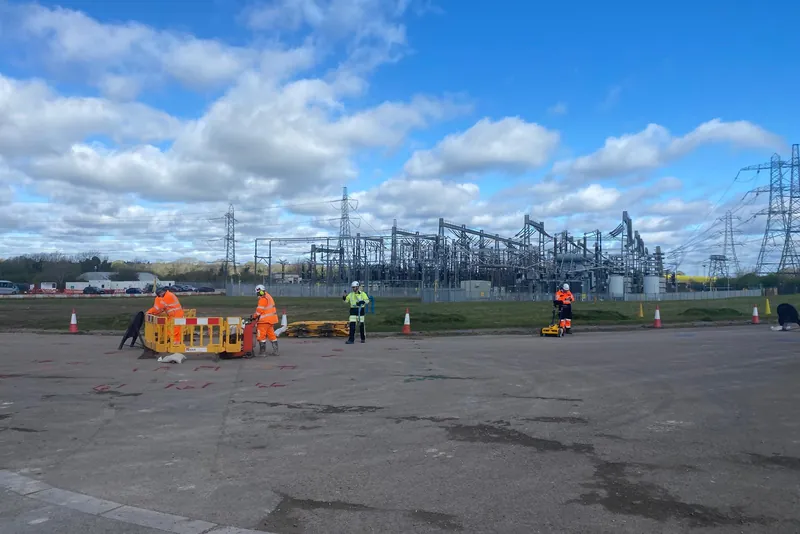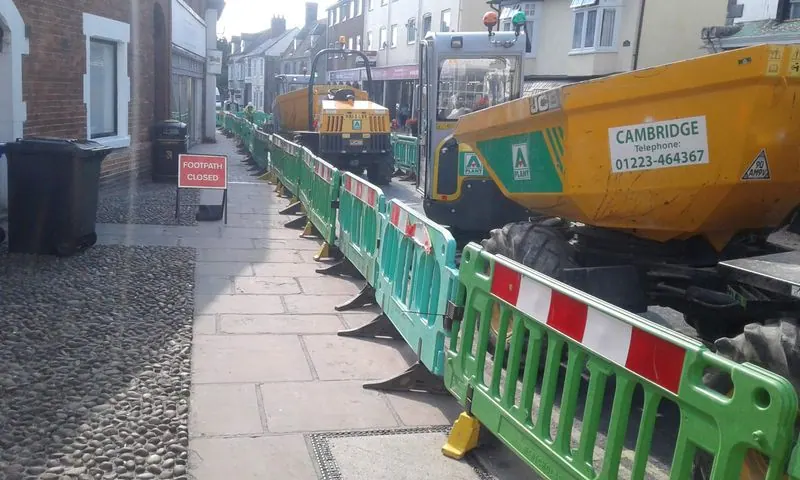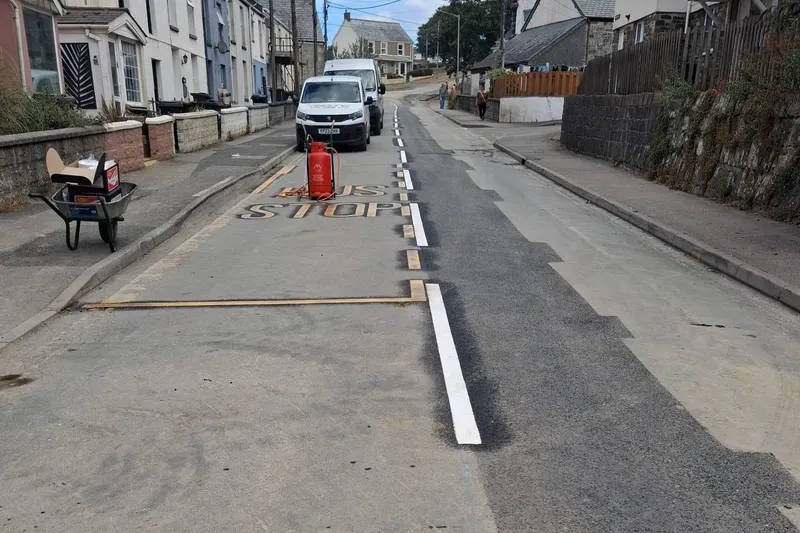
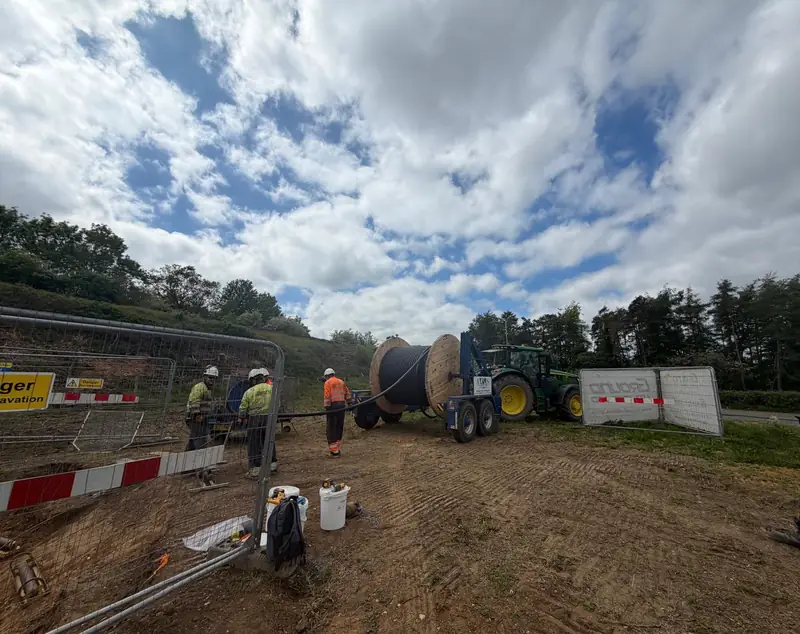
A new 11kV or 33kV connection is built in a fixed order. It runs from application and quote, through design, land rights and the build, to final connection and adoption. The network operator controls the start and the end, and in between much of the work is contestable, so accredited independent companies can do it.
This guide follows that order and says who does each step. It does not repeat the definitions of ICPs, IDNOs, NERS scopes or contestable works. For those, see our guide NERS, ICPs and IDNOs explained.
Key points
- The application goes to the distribution network operator (DNO) for the area. The customer, its consultant or its ICP can make it.
- By law, a DNO must quote for an HV demand connection within 35 working days. For EHV it has 65 working days. 11kV counts as HV and 33kV as EHV.
- The quote splits the work into non-contestable work (DNO only) and contestable work (DNO or an accredited provider).
- The customer or its provider negotiates land rights for adopted cables, on the DNO's forms. The DNO's solicitors complete them.
- The DNO will not programme its works until the quote is accepted and paid and the consents are complete. On the ICP route, it must also accept the design and programme.
- Civils, cable laying, jointing and substation work are each done by a provider holding that NERS scope at that voltage. The final connection is made by the DNO, or by an ICP where it is accredited and the DNO agrees.
In this guide
- What are the stages of a new HV connection?
- Who makes the connection application?
- How long does the DNO have to quote?
- Who should build the contestable work?
- Who sets the point of connection and approves the design?
- Who arranges land rights and consents?
- When does the DNO programme the work?
- Who builds what on site?
- Who makes the final connection and adopts the network?
- Who does what: the full table
- How do 11kV and 33kV jobs differ?
- Where Ground Utilities fits
- Frequently asked questions
- Sources
What are the stages of a new HV connection?
A new HV connection passes through nine stages: application, quote, choosing who builds, design, land rights, programming, build, final connection and adoption. The stages below are common to the DNOs' published processes. Names and forms vary by DNO, so check your own DNO's connection guidance.
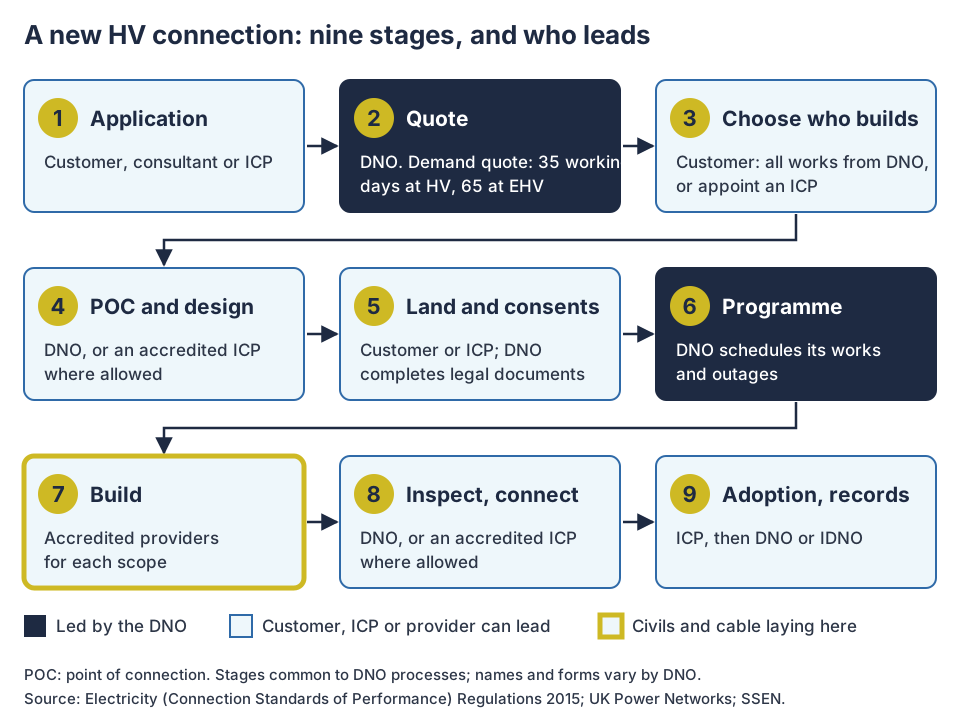
| Stage | What happens | Led by |
|---|---|---|
| 1. Application | Request for a new connection or more capacity | Customer, consultant or ICP |
| 2. Quote | DNO prices the work, split into contestable and non-contestable | DNO |
| 3. Choose who builds | Accept "all works" from the DNO, or "non-contestable only" and appoint an ICP | Customer |
| 4. Point of connection and design | POC set; network designed and approved | DNO, or an accredited ICP where allowed |
| 5. Land rights and consents | Easements, leases, wayleaves, planning, street works | Customer or ICP; DNO completes legal documents |
| 6. Programme | DNO schedules its own works and outages | DNO |
| 7. Build | Civils, ducting, cable laying, joint bays, substation civils and plant, jointing | Accredited providers for each scope |
| 8. Inspection and final connection | DNO inspects; new network joined to the live system and energised | DNO, or an accredited ICP where allowed |
| 9. Adoption and records | As-laid records handed over; DNO or IDNO takes ownership | ICP, then DNO or IDNO |
Who makes the connection application?
The application goes to the DNO that owns the network in the area. The customer can make it, or a consultant or ICP can make it on the customer's behalf.
Generation and storage applications are also subject to connections reform. Their Gate 2 evidence is checked by the DNO or by NESO. For what happens after a Gate 2 offer, see our guide to Gate 2 offers, the cable route and civils.
How long does the DNO have to quote?
For demand connections, the Electricity (Connection Standards of Performance) Regulations 2015 set guaranteed periods. If the DNO misses one, it must pay the customer for each working day it is late.
| Connection type | Highest voltage of the works | Quote within | Payment per working day late |
|---|---|---|---|
| LV demand connection | Up to 1,000 volts | 25 working days | £65 |
| HV demand connection | Over 1,000 volts to 22,000 volts (11kV, 20kV) | 35 working days | £135 |
| EHV demand connection | Over 22,000 volts up to 132,000 volts (33kV, 66kV) | 65 working days | £200 |
Source: regulations 2 and 6 and Schedule 1 of the Regulations, as amended in 2023. In Scotland the EHV band stops just below 132,000 volts.
These standards apply to demand connections. Exemptions in the Regulations can also apply, so read your DNO's guaranteed standards statement.
What is in the quote?
The quote prices the non-contestable work, which only the DNO can do, and the contestable work, which you can buy elsewhere. The options differ by DNO:
| DNO | Quote options |
|---|---|
| UK Power Networks | A convertible quote with three options, A, B and C. These let you or your ICP choose who builds the contestable work and who makes the final closing joint |
| SSEN | Two options: "All works", or "Non-contestable works only" |
Who should build the contestable work?
The customer chooses who builds the contestable work. You can accept the DNO's price for all the work, or accept the non-contestable part only and appoint an ICP to build the rest.
If you appoint an ICP, the contract chain changes:
- UK Power Networks says you "deal contractually with the ICP directly".
- The ICP then contracts with UK Power Networks for the non-contestable work.
- You can pass your quote to the ICP so it can accept option B or C directly.
- A large HV scheme is often split again below the ICP. A principal provider may use a jointing contractor and a civils and cable laying contractor, each with its own NERS scopes.
Who sets the point of connection and approves the design?
The DNO sets the point of connection and approves the design, unless an accredited ICP is allowed to do it for that voltage. Traditionally the DNO did both.
The Competition in Connections Code of Practice, approved by Ofgem in 2015 and binding on DNOs through their licence, opened them up. Ofgem's decision said the Code "will allow ICPs to determine their own POC, approve their own designs".
In practice:
- Point of connection. The DNO sets it, or an ICP accredited for self-determination does, where the DNO allows it for that voltage.
- Design. A NERS design-accredited provider, or the DNO, designs the extension. The DNO approves it, or the provider self-approves where the Code allows.
- Reinforcement upstream. SSEN lists design of upstream reinforcement as DNO-only work.
The design sets the route, cable sizes, joint bay positions and substation layout. Every later stage builds to it, so changes after approval cost time.
Who arranges land rights and consents?
The customer or its ICP usually negotiates land rights, and for adopted cables the DNO's solicitors complete the legal documents at the customer's cost. Planning and street works sit with the customer or its contractors.
- Negotiation. SSEN lists "land rights negotiations with third party landowners" as contestable. The customer, the ICP or the DNO can do it.
- Legal documents. SSEN keeps the wayleave and easement documents, and the agreements with landowners, as DNO work. UK Power Networks requires its standard form on option B or C. It adds "the conveyancing and legal completion of the relevant interest being effected by UK Power Networks' solicitors". The customer pays.
- Planning. Substations and some cable routes need planning consent. The customer or its planning consultant usually leads.
- Street works. Private cable in the highway needs a Section 50 licence. DfT guidance says any organisation or individual that is not a statutory undertaker or an EV chargepoint operator must apply for one. Statutory undertakers have their own street works rights, so agree early with the DNO which route applies to cable it will adopt.
When does the DNO programme the work?
The DNO programmes its work only once the quote is accepted and paid, the legal consents are complete and, on the ICP route, the design is accepted. UK Power Networks will not schedule any work until:
- it has received any payment due and a signed acceptance form;
- all the legal consents are completed;
- a site meeting has been held, if it thinks one is needed; and
- on option B or C, it has reviewed and accepted the ICP's or IDNO's design and programme.
Other DNOs set similar conditions. So the DNO's dates for outages and the final connection hang on finished land rights and an accepted design. Plan the civils start around them.
Who builds what on site?
Each part of the build needs a provider holding the matching NERS scope at the right voltage, or the DNO.
| Work | Who can do it |
|---|---|
| Trenching and duct installation, on site and in the highway | DNO or ICP; SSEN also lets the applicant do the on-site trench and ducts |
| Joint bay excavation | DNO or ICP |
| Cable laying | Provider with NERS cable laying approval at that voltage |
| Substation buildings and civils | DNO or ICP |
| Substation plant | Provider with NERS substation scope |
| Jointing within the new network | Provider with NERS jointing approval at that voltage |
| Testing and as-laid records | DNO or ICP |
| Inspection of the contestable work | DNO only |
Based on SSEN's published table of contestable and non-contestable work. Other DNOs differ in detail.
The DNO inspects the contestable work as it goes. SSEN says its delivery team will arrange to witness the ICP installing the contestable works where required. For UK Power Networks' build standards see our guide to UKPN G81, and for joint bays and jointer competence see cable jointing and joint bays.
Who makes the final connection and adopts the network?
The DNO makes the final connection to the live system, or an ICP accredited for it where the DNO agrees. The DNO or an IDNO then adopts the new network.
- SSEN says some ICPs can carry out the final connection, and if they are not accredited to, SSEN will.
- UK Power Networks gives the ICP "the choice of who carries out the final closing joint onto our network", through options A to C. It notes ICPs cannot do reinforcement and, in some cases, the final joint to live mains.
- Commissioning, connection and energisation of the extension are listed by SSEN as DNO work.
After energisation, the DNO or an IDNO adopts the new assets and operates and maintains them. The as-laid records go to the adopting operator.
Who does what: the full table
This table sets out who does each task on a typical new 11kV or 33kV connection.
| Task | Customer or developer | DNO | ICP or IDNO | Civils and cable laying contractor | Jointing provider |
|---|---|---|---|---|---|
| Application | Yes, or via agent | Receives | Can apply for the customer | No | No |
| Quote | Accepts | Issues | Prices contestable work | No | No |
| Point of connection | No | Yes | Where accredited and allowed | No | No |
| Design and approval | No | Yes | Design-accredited providers; self-approval where allowed | No | No |
| Land rights negotiation | Yes | Yes | Yes | No | No |
| Wayleave and easement legal documents | Signs and pays | Yes | No | No | No |
| Trenching, ducts, joint bays, cable laying, reinstatement | No | Yes | Yes | Yes, within its NERS scopes | No |
| Jointing and terminations | No | Yes | Yes, within its scopes | No | Yes |
| Inspection | No | Yes | No | No | No |
| Final connection and energisation | No | Yes | Where accredited and the DNO agrees | No | Where accredited |
| Adoption and operation | No | Yes | IDNO only | No | No |
How do 11kV and 33kV jobs differ?
The steps are the same at 11kV and 33kV. Three things change: the quote deadline, the number of accredited providers and the size of the civils.
- Quote time. An 11kV demand job is HV under the Regulations: 35 working days. A 33kV job is EHV: 65 working days.
- Fewer providers at 33kV. On 19 November 2026, 233 providers on the LRQA NERS register held full cable laying approval at 11kV. Only 113 held it at 33kV. For jointing, 199 held full approval at 11kV and 74 at 33kV. Our NERS register in numbers guide has the full breakdown.
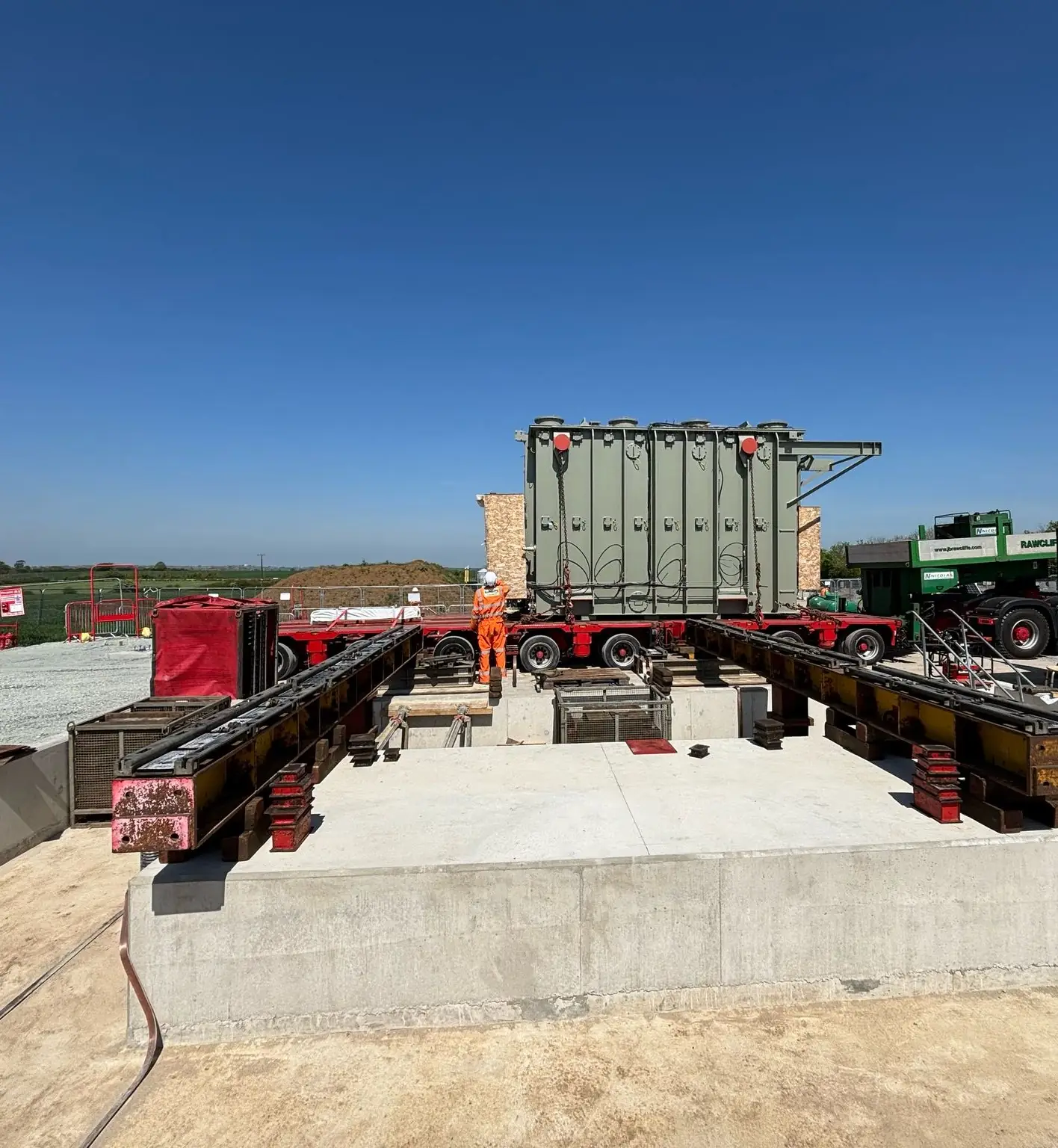
- Bigger civils. 33kV routes often run further, with larger cables and more joint bays. Our own 33kV routes have included 19 joint bays over 7.8 km at Indian Queens and 45 joint bays over about 25 km in Cambridgeshire.
Where Ground Utilities fits
Ground Utilities builds the civils and cable route on new HV connections. We hold full NERS approval for civil works, and for cable laying at LV, 11kV, 20kV, 33kV, 66kV and 132kV, with all six DNOs.
In the stages above, we work at stage 7:
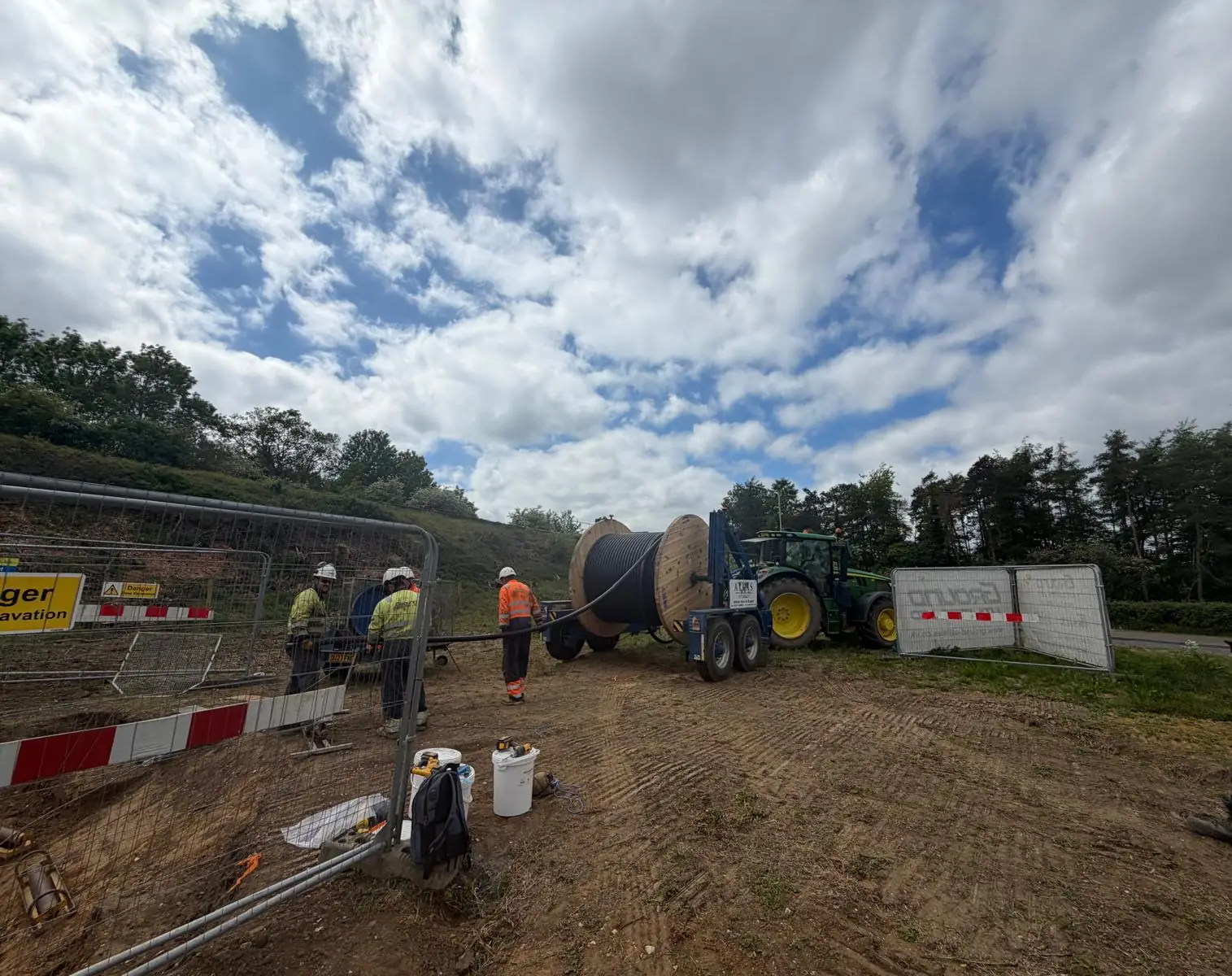
- We dig the trench, lay ducts, build joint bays, pull the cable, build substation civils and reinstate.
- Recent routes include the Thetford 33kV route from UK Power Networks' Barnham substation and the 11kV route at the Whittle Laboratory in Cambridge.
We do not make connection applications, and we do not do design. We do not joint or terminate cables, and we do not make the final live connection to the network.
We do no gas work. So on a new connection we work for, or alongside, the ICP, IDNO or DNO that holds those roles.
See our HV and LV cable installation and ICP civils and cable laying pages, or call 01223 423918.
Frequently asked questions
How do I apply for a new 11kV or 33kV connection?
Apply to the DNO for your area, using its application form. You can apply yourself, or a consultant or ICP can apply for you.
How long does a DNO take to quote for an HV connection?
For demand connections, the legal deadline is 35 working days at HV (such as 11kV) and 65 working days at EHV (such as 33kV). The DNO pays £135 or £200 for each working day it is late, unless an exemption applies.
What are contestable works?
The parts of a new connection that someone other than the DNO may build. Our NERS guide explains them in full.
Can an ICP make the final connection?
Sometimes. It needs the right NERS accreditation, and the DNO must allow it. Otherwise the DNO makes the final joint.
Who negotiates easements for a new HV cable?
The customer, its ICP or the DNO can negotiate. The legal documents are usually prepared and completed by the DNO and its solicitors, on its standard forms, at the customer's cost.
When will the DNO book my connection date?
Once you have accepted the quote and paid, and the legal consents are complete. On the ICP route, the DNO must also have accepted the design and programme.
Who digs the trench for a new HV connection?
The DNO, an ICP, or a NERS accredited civils contractor working for one of them. SSEN also allows the applicant to dig and duct on its own site.
Does Ground Utilities make DNO applications?
No. We build the civils and cable route for the ICP, IDNO or DNO that holds the application and the connection.
Sources
- The Electricity (Connection Standards of Performance) Regulations 2015, regulation 2 (legislation.gov.uk)
- The Electricity (Connection Standards of Performance) Regulations 2015, regulation 6 (legislation.gov.uk, 2015)
- The Electricity (Connection Standards of Performance) Regulations 2015, Schedule 1 (legislation.gov.uk, as substituted 2023)
- Our decision on the suitability of the Competition in Connections Code of Practice (Ofgem, 30 June 2015)
- 4.1.12 Appointing an ICP or IDNO (UK Power Networks)
- 4.1.11 Programming your work (UK Power Networks)
- 3.28 Land rights for option B or C (UK Power Networks)
- New connections: you have a choice (SSEN)
- Issuing section 50 street works licences (Department for Transport, 2026)
- Find a NERS registered provider (LRQA, checked 18 November 2026)