A section 38 agreement is how a developer gets new estate roads adopted by the highway authority. A section 104 agreement does the same for new sewers with the water company. A section 278 agreement lets a developer pay for changes to an existing public road. Each needs approved designs, a bond, fees and a maintenance period before adoption.
Key points
- Sections 38 and 278 are in the Highways Act 1980. Section 104 is in the Water Industry Act 1991. All three apply in England and Wales.
- Section 38 covers new roads that will become public highway. Section 278 covers works to a road that is already public highway.
- Section 104 covers new foul and surface water sewers, and pumping stations, that the water company will take over.
- Highway authorities such as Buckinghamshire ask for a bond covering the full cost of the road works. Thames Water and Anglian Water set the sewer surety at 10% of their estimate of the works.
- Inspection fees are a percentage of the bond or the estimated cost of works: 1.4% at Thames Water for sewers, 7.5% at Suffolk and 8.5% at Derbyshire for roads.
- Expect a maintenance period of at least 12 months after the works are finished before final adoption.
- Works built before the agreement is signed are at the developer's risk and may have to be dug up for testing.
In this guide
- What is a section 38 agreement?
- What is a section 278 agreement?
- What is the difference between a section 38 agreement and a section 278 agreement?
- What is a section 104 agreement?
- How much does a section 38 cost?
- How much does a section 104 agreement cost?
- Why do adoption agreements stall?
- What does it mean if sewers or roads are not adopted?
- Does this apply in Wales and Scotland?
- Where Ground Utilities fits
- Frequently asked questions
- Talk to Ground Utilities
What is a section 38 agreement?
A section 38 agreement is a legal agreement under the Highways Act 1980 in which the local highway authority agrees to adopt a new road once the developer has built it to the authority's standard. After adoption, the road is "maintainable at the public expense" and the council looks after it.
The power is in section 38(3). In practice the agreement covers the carriageway, footways, verges, highway drainage, street lighting, signs and road markings within the adoption boundary, each shown on a coloured general arrangement plan.
Who signs a section 38 agreement?
The highway authority (the county council or unitary authority) signs with the developer and anyone else who owns the land being dedicated. The surety, the bank or insurer standing behind the bond, must be named on the application and be acceptable to the council. The groundworks or civils contractor does not sign, though it builds what the agreement describes.
How does a section 38 agreement work?
- Obtain planning permission. Buckinghamshire Council states that planning consent must come first.
- Prepare the technical submission: general arrangement, levels, drainage design and calculations, street lighting, visibility splays, and a drawing of existing and proposed utility apparatus.
- Submit the application and pay the initial fee. Suffolk takes an initial £5,000 before it processes an application.
- Technical review. Suffolk says approval typically takes 6 weeks from initial review on a straightforward scheme.
- Legal drafting. The bond is arranged and fees paid before the agreement is sealed.
- Pre-start meeting with the council's inspecting engineer, then construction with inspections at agreed stages.
- Provisional certificate once the road is built and open to the public. Buckinghamshire allows the bond to be reduced by up to 90% at this point.
- Maintenance period, normally at least 12 months, with the developer still responsible for the road.
- Final certificate and adoption, once defects are fixed and as-built drawings handed over.
Sign the agreement before you start building. Suffolk warns that work done without inspection is at the developer's risk, and it may require retrospective testing, including opening up the pavement, at the developer's cost.
What happens if there is no section 38 agreement?
The road stays private, and the Advance Payments Code (section 219 of the Highways Act 1980) can apply: before building a house that fronts a private street, the owner must pay or secure the cost of the street works with the council. A section 38 agreement is one of the exemptions (section 219(4)(d)).
What is a section 278 agreement?
A section 278 agreement lets a developer pay for highway works the authority could carry out itself. It is used when a development needs changes to a road that is already public, such as a new junction, roundabout, footway or crossing.
The authority must be satisfied it benefits the public. The cost can include the authority's administrative costs and future maintenance. If a sum goes unpaid, the authority can stop use of the new access and register the debt as a charge on the land (section 278(5) and (6)).
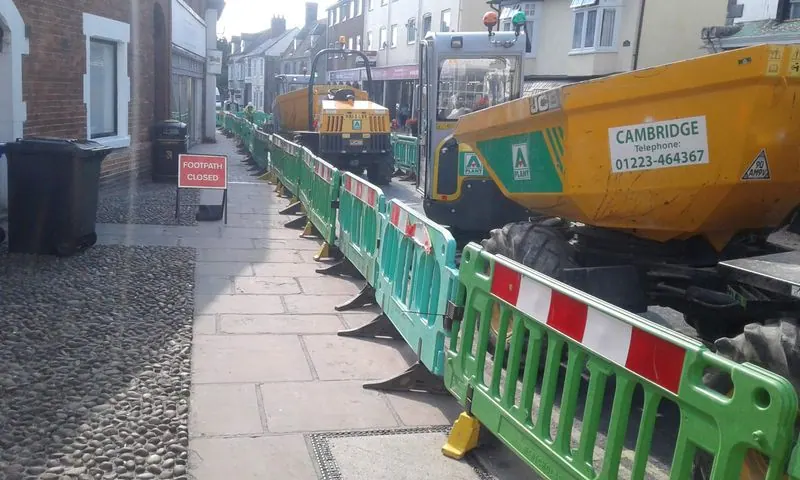
Because the works are on a live road, they also need traffic management and the authority's permission to work there.
What is the difference between a section 38 agreement and a section 278 agreement?
Section 38 is for building new roads that the council will adopt. Section 278 is for altering roads that are already public highway. Many housing sites need both: a section 278 for the new junction on the existing road and a section 38 for the estate roads behind it.
| Section 38 | Section 278 | |
|---|---|---|
| What it covers | New roads to become public highway | Works on existing public highway |
| Typical works | Estate roads, footways, lighting, highway drains | Junctions, roundabouts, crossings, footway widening |
| Parties | Highway authority, developer, landowner, surety | Highway authority and developer |
| Outcome | New road adopted after maintenance period | Altered road stays public; developer pays for the change |
| Security | Bond, often the full estimated cost of works | As the authority requires |
What is a section 104 agreement?
A section 104 agreement is made under the Water Industry Act 1991 between the sewerage undertaker (the water company) and the person building a sewer, a drain that connects to a public sewer, or sewage disposal works. If the work is built to the agreed terms, the water company adopts it on completion or on a date or event the agreement sets.
The developer asks the water company for the agreement (section 104(2)). Once signed, the owners or occupiers of homes served by the sewer can enforce it against the water company (section 104(5)).
What standards apply in England?
Since 1 April 2020, sewer adoption in England has followed Ofwat's Code for Adoption Agreements. Water UK's Sewerage Sector Guidance (SSG) sets out the process, and its Appendix C, the Design and Construction Guidance (DCG), sets the technical standard for adoptable foul and surface water sewers. The DCG replaced the older "Sewers for Adoption" manual. Water companies add their own local practices on top: Thames Water requires sewers to meet both, so read both.
The legal agreement is based on the Model Sewerage Adoption Agreement published under the Code. Thames Water warns that asking for changes to the model wording can add cost and delay.
How does a section 104 agreement work?
- Agree capacity and the point of connection with the water company before the drainage layout is fixed.
- Design the sewers to the DCG and the company's local practices, then submit the application with drawings and calculations.
- Technical assessment. Thames Water commits to an initial assessment within 7 calendar days and a full technical assessment within 28 calendar days of a complete application.
- Pay the inspection fee, sign the agreement and provide the surety.
- Apply separately under section 106 of the Act for consent to connect to the existing public sewer.
- Build, with the water company's inspector attending at agreed stages.
- Provisional certificate, then a maintenance period of at least 12 months. Thames Water requires a jet-clean and CCTV survey no later than two months before it ends.
- Final certificate and vesting certificate. The sewer is now public.
Section 102 and section 185: two related routes
Section 102 lets an owner ask the water company to adopt a sewer that already exists. Section 185 lets a person with an interest in land require the water company to move its pipes or sewers where a development needs it, at that person's cost. It does not apply to apparatus in a street (section 185(3)).
How much does a section 38 cost?
Each council sets its own rates. You pay a bond, an inspection fee, legal fees and sometimes commuted sums.
The bond covers the cost of finishing the road if the developer fails. Buckinghamshire sets it at the full cost of the works, including any alterations to utility apparatus, and asks for the utility companies' estimate letters. It stays in place until the final certificate.
Published inspection fees:
| Council | Section 38 fee | Example on £500,000 of works |
|---|---|---|
| Suffolk County Council (guidance dated February 2026) | 7.5% of the bond, with £5,000 paid up front | £37,500 |
| Derbyshire County Council | 8.5% of the total estimated cost of the works, using the council's schedule of rates | £42,500 |
Legal fees are charged on top. Commuted sums pay for future maintenance of non-standard items such as trees, swales and traffic signals.
Section 278 fees are similar. On Derbyshire's sliding scale, works between £10,000 and £200,000 are charged £1,800 plus 11% of the amount over £10,000, so £100,000 of works carries a fee of £11,700.
How much does a section 104 agreement cost?
Thames Water's published application form gives:
- £1,725 application and administration charge.
- Project management and inspection fee of 1.4% of Thames Water's estimated construction cost.
- A surety liable for up to 10% of the agreed estimated construction value, with a minimum of £5,000.
- Legal fees, invoiced by the company's solicitors to yours.
Anglian Water, which serves Cambridgeshire, also sets its surety bond at 10% of its own estimate of the works, and runs a bond waiver for developers who meet its criteria, including a minimum of five section 104 agreements a year and a satisfactory credit check.
Why do adoption agreements stall?
Most delays come from incomplete information or work that does not match the approved drawings:
- Incomplete submissions. Suffolk pauses work on a design with significant omissions.
- Utility diversions not priced. Buckinghamshire will not complete an agreement until statutory undertakers' requirements are known.
- Drawings changed after approval. Suffolk voids technical acceptance if drawings change without its agreement, and it lapses after 24 months.
- Starting before the agreement is sealed, leading to retrospective testing or refusal to adopt.
- Surface water outfalls to a watercourse without the landowner's permanent right to discharge.
- Final surfacing laid under construction traffic, which may have to be relaid.
- Street lighting designs that do not meet the lighting authority's specification.
- Missing handover documents at the end: as-built drawings, CCTV surveys, test certificates, easements.
- Roads waiting on sewers. Angus Council in Scotland, for example, will not consider a road for adoption until Scottish Water has vested the drainage.
What does it mean if sewers or roads are not adopted?
If sewers are not adopted, they stay private. The homeowners, or a management company, own them and pay to repair and clear them. If roads are not adopted, the council does not maintain them, and the cost usually falls on residents through an estate charge.
The private sewer transfer on 1 October 2011 moved most existing private sewers and lateral drains connected to the public sewer into water company ownership. It does not cover sewers built since 1 July 2011. Anglian Water's guidance says those are adopted only through a section 104 agreement. An owner of an existing private sewer can still apply for adoption under section 102.
The Competition and Markets Authority's 2024 housebuilding study found that 80% of new homes sold by the eleven largest builders in 2021 to 2022 were subject to estate management charges. It recommended that councils be required to adopt amenities on all new estates. Buyers should ask their solicitor whether section 38 and section 104 agreements are in place and bonded, and whether any estate charge applies.
Does this apply in Wales and Scotland?
Wales uses the same Acts, with two differences. From 1 October 2012, section 106B of the 1991 Act has applied to sewerage companies wholly or mainly in Wales. A new sewer or lateral drain can only use the right to connect to the public sewer if a section 104 agreement covering construction standards and adoption is in place. Since 7 January 2019, new developments in Wales also need sustainable drainage approved by the local authority acting as the SuDS Approving Body (SAB). Ofwat's Code for Adoption Agreements applies to companies operating wholly or mainly in England.
Scotland has separate law. A developer needs construction consent from the roads authority under section 21 of the Roads (Scotland) Act 1984 before building a new road. For housing, Moray Council requires a road bond or deposit first. Sewers are "vested" in Scottish Water under the Sewerage (Scotland) Act 1968 to its "Sewers for Scotland" standard.
Where Ground Utilities fits
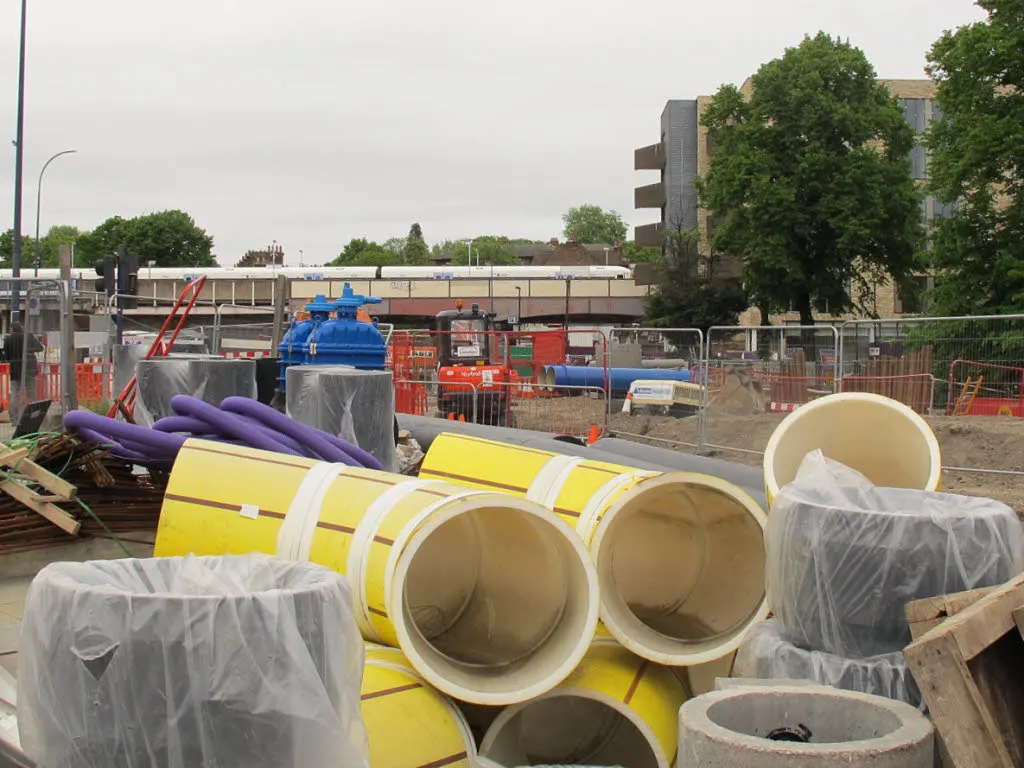
The developer signs the agreements. A contractor builds the roads, sewers and highway works they describe, and the inspectors judge that work. Ground Utilities is a civils, groundworks and multi-utility contractor based in Cottenham, Cambridgeshire, working across the UK. Its civil construction team covers earthworks, drainage, deep excavations, external works, interceptor tanks and pumping systems. Its waste water and multi-utility services include mains sewers alongside electricity, water and telecoms ducts.
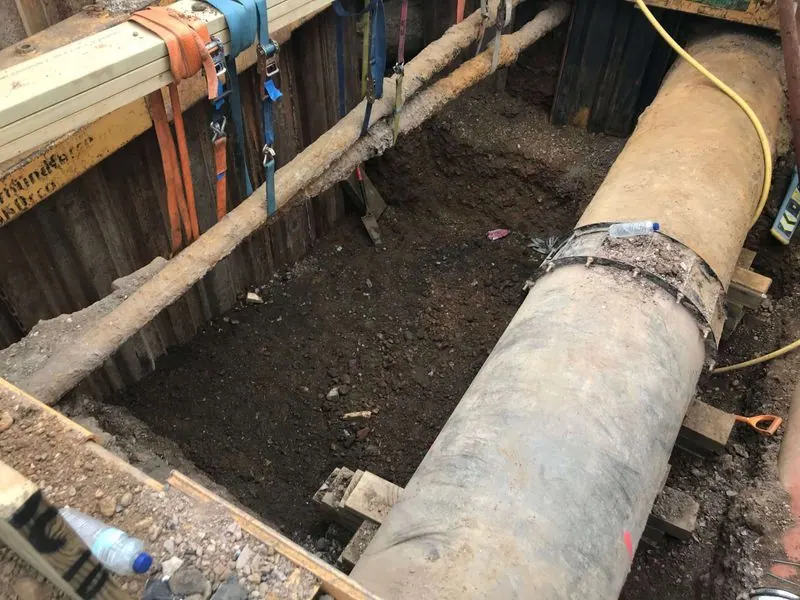
On a sewer diversion route for a new development in South West London, GU dug 15 excavations up to 3.4 m deep to expose and support an existing sewer and other utilities, with temporary works and soil sampling. GU also coordinates with local highway authorities to secure permits for work in the road, as set out on its accreditations page.
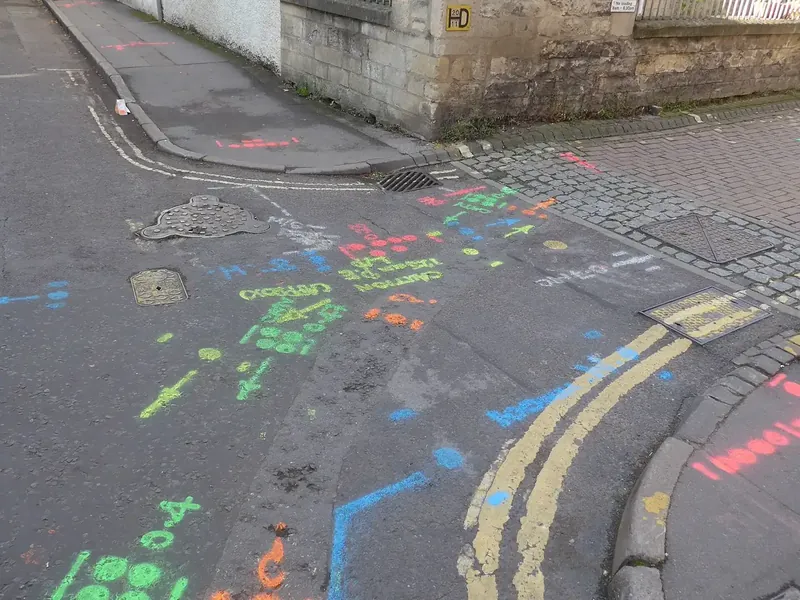
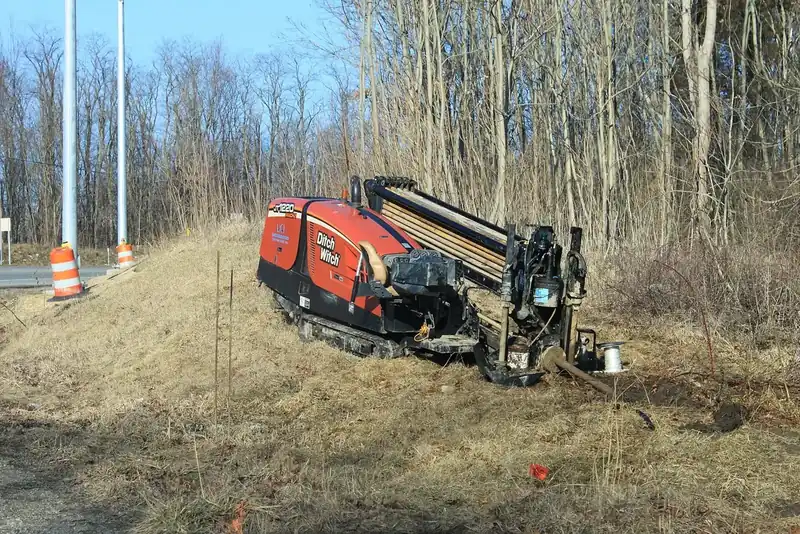
Related reading: what ICP and NERS mean for a new connection, avoiding utility strikes, underground utility colour codes and horizontal directional drilling.
Frequently asked questions
How does a section 38 agreement work?
The developer submits road designs to the highway authority, pays fees and provides a bond, then signs the agreement. The road is built under inspection, a provisional certificate is issued, and after a maintenance period, normally at least 12 months, the council issues a final certificate and adopts the road.
What is the difference between a section 38 agreement and a section 278 agreement?
Section 38 is for new roads that the council will adopt. Section 278 is for works on a road that is already public highway, such as a new junction. Many housing sites need both.
How much does a section 38 cost?
Each council sets its own fees. Suffolk charges 7.5% of the bond and Derbyshire 8.5% of the estimated cost of works, plus legal fees and any commuted sums. The bond itself is often the full estimated cost of the road works.
What does it mean if sewers are not adopted?
The sewers stay private. Homeowners or a management company own them and pay for repairs and clearing. Sewers built since 1 July 2011 become public only through a section 104 agreement or a later section 102 application.
Who signs a section 104 agreement?
The water company and the developer, plus any landowner and the surety. Homeowners served by the sewer can enforce the agreement against the water company under section 104(5) of the Water Industry Act 1991.
How long does a section 104 agreement take?
Technical assessment takes weeks: Thames Water commits to 28 calendar days from a complete application. Construction follows, then a maintenance period of at least 12 months before the sewer vests.
Can I start building before the agreement is signed?
You can, but at your own risk. Councils and water companies may refuse to adopt work they did not inspect, or require it to be opened up and tested at your cost.
Do section 38, 104 and 278 apply in Scotland?
No. Scotland uses construction consent under section 21 of the Roads (Scotland) Act 1984 for roads, and Scottish Water vests sewers under the Sewerage (Scotland) Act 1968.
Talk to Ground Utilities
If you are planning a site with roads, sewers or highway works to be adopted, call Ground Utilities on +44 1223 423918 or email info@ground-utilities.co.uk. Send the planning drawings and the highway authority and water company you are dealing with, and the team will tell you what it can take on. You can also use the contact form.
Sources
- Highways Act 1980, section 38. legislation.gov.uk. legislation.gov.uk
- Highways Act 1980, section 278. legislation.gov.uk. legislation.gov.uk
- Highways Act 1980, section 219 (Advance Payments Code). legislation.gov.uk. legislation.gov.uk
- Water Industry Act 1991, section 104. legislation.gov.uk. legislation.gov.uk
- Water Industry Act 1991, section 102. legislation.gov.uk. legislation.gov.uk
- Water Industry Act 1991, section 185. legislation.gov.uk. legislation.gov.uk
- Water Industry Act 1991, section 106B. legislation.gov.uk. legislation.gov.uk
- The Flood and Water Management Act 2010 (Commencement No. 8 and Transitional Provisions) Order 2012, S.I. 2012/2048 (W. 239), explanatory note. legislation.gov.uk
- Roads (Scotland) Act 1984, section 21. legislation.gov.uk. legislation.gov.uk
- Suffolk County Council, Guidance for S38 Agreement (February 2026). suffolk.gov.uk
- Buckinghamshire Council, Section 38 guidance notes. buckinghamshire.gov.uk
- Derbyshire County Council, Development control fees: section 38 and section 278. derbyshire.gov.uk
- Thames Water, Apply for us to adopt your new sewer (application form and charges). thameswater.co.uk
- Anglian Water, Bond waiver guide. prod-kic.anglianwater.co.uk
- Anglian Water, Sewer ownership guidance. anglianwater.co.uk
- Anglian Water, Sewer adoptions (Design and Construction Guidance replaces Sewers for Adoption; SSG from 1 April 2020). anglianwater.co.uk
- Water UK, Sewerage Sector Guidance Appendix C: Design and Construction Guidance, version 2.3 (November 2023). water.org.uk
- Ofwat, Code for adoption agreements (scope: companies wholly or mainly in England). ofwat.gov.uk
- Welsh Government, Private sewer transfer regulations guidance. gov.wales
- The Water Industry (Schemes for Adoption of Private Sewers) Regulations 2011. legislation.gov.uk
- HR Wallingford, New developments in SuDS regulations (Schedule 3 in force in Wales from 7 January 2019). hrwallingford.com
- Competition and Markets Authority, CMA finds fundamental concerns in housebuilding market (26 February 2024). gov.uk
- Angus Council, road adoption conditions linked to Scottish Water vesting. angus.gov.uk
- Moray Council, Road Construction Consent (road bond). moray.gov.uk
- Ground Utilities: services/civil-construction, services/waste-water, services/multi-utility-services, project/deep-excavations-for-sewer-and-water-service, accreditations (site pages).