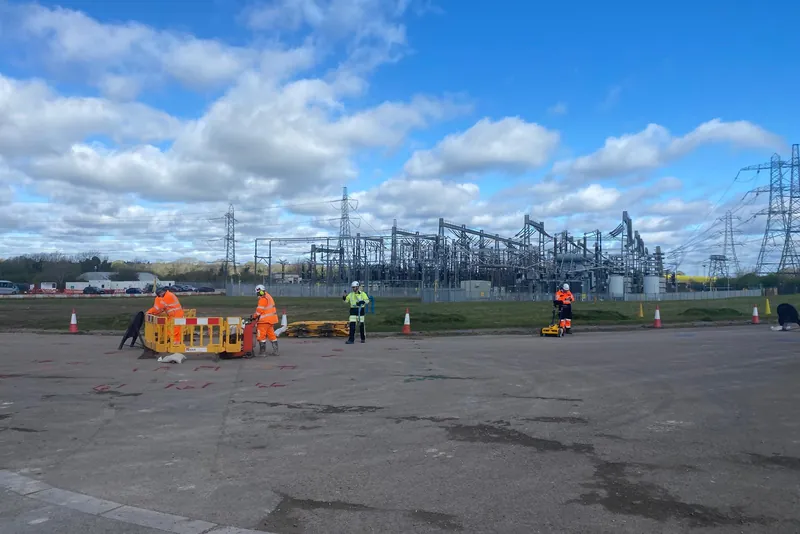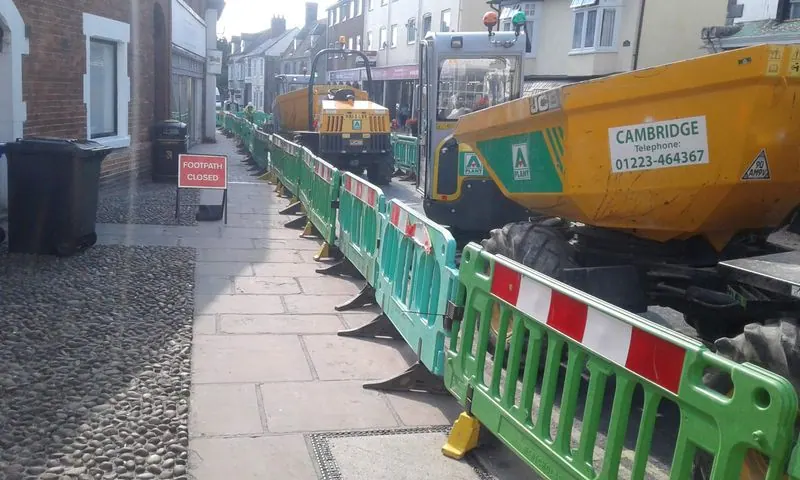
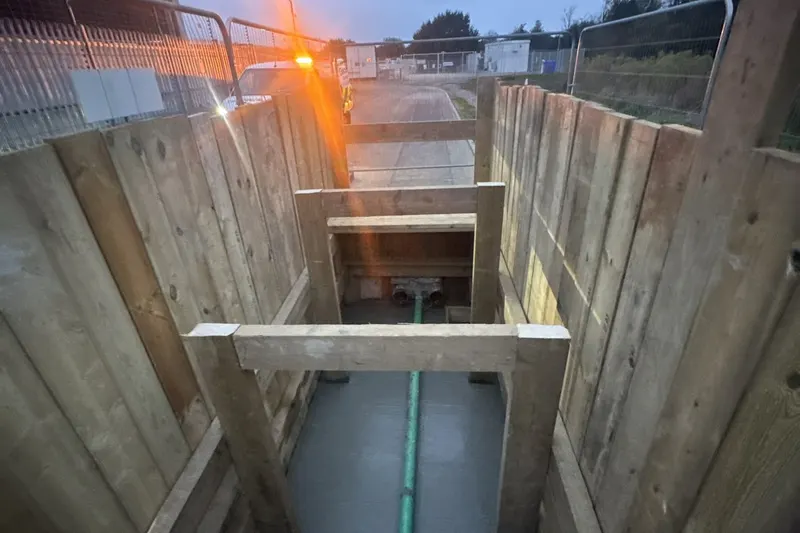
A trench can collapse without warning. HSE says a cubic metre of soil can weigh more than 1.5 tonnes, and a collapse can bury or crush anyone working in it. Falling material, plant toppling in and live services add further risks.
The law in Great Britain is set by the Construction (Design and Management) Regulations 2015, mainly regulation 22. HSE guidance explains how to meet it in practice. This guide brings both together for site managers, supervisors and clients planning cable routes, sewer work and deep excavations.
It does not replace a temporary works design. On anything beyond the simplest dig, HSE says a design with calculations will be needed.
Key points
- CDM 2015 regulation 22 requires all practicable steps to stop an excavation collapsing, material falling, and anyone being buried or trapped.
- There is no "safe" depth in the law. HSE says no ground can be relied upon to stand unsupported in all circumstances.
- Support goes in as you dig. Never work ahead of the support or remove it early.
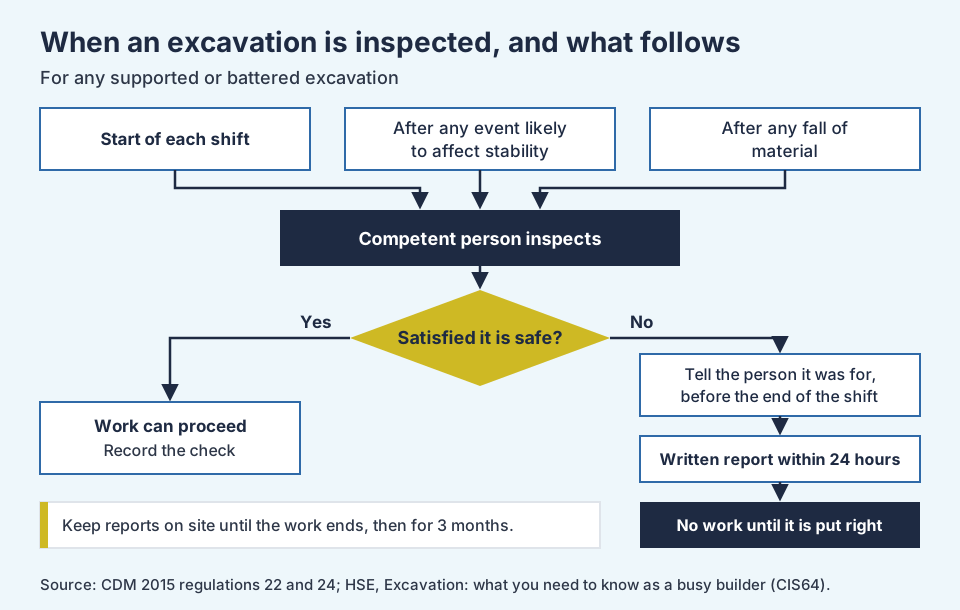
- A competent person inspects supported or battered excavations at the start of each shift. They inspect again after any event affecting stability, and after any fall of material.
- If the inspector is not satisfied, they must say so before the end of the shift and give a written report within 24 hours. Nobody works in the excavation until the problem is fixed.
- Deep excavations can be confined spaces. Petrol and diesel engines should not be used in them without ducted exhaust or forced ventilation.
In this guide
- What does the law say about excavations?
- Is there a depth at which a trench is safe without support?
- How should an excavation be planned?
- What are the ways to support a trench?
- Trench box or trench sheets: which should you use?
- How do you stop people, plant and spoil falling in?
- How do you get in and out safely?
- What about groundwater, fumes and confined spaces?
- How do you protect exposed services and nearby structures?
- Who inspects an excavation, and what goes in the report?
- What should you check before the dig and every shift?
- Where Ground Utilities fits
- Frequently asked questions
- Planning a deep excavation?
- Sources
What does the law say about excavations?
Regulation 22 of CDM 2015 applies to every excavation on a construction site. It has five parts:
- Collapse and burial. All practicable steps must be taken, including supports or battering where necessary. No excavation may collapse, no material from its walls or roof may fall, and nobody may be buried or trapped.
- Falls. Suitable and sufficient steps must stop any person, work equipment or material falling into the excavation.
- Overloading. Steps must be taken, where necessary, to stop the excavation or the ground beside it being overloaded by equipment or material.
- Inspection. Where supports or battering are used, no work may take place until a competent person has inspected the excavation and is satisfied it is safe.
- Defects. If the inspector reports a problem, no work may take place in the excavation until it is put right.
Other parts of CDM 2015 also apply:
- Regulation 19 says any temporary support must be designed, installed and maintained to withstand foreseeable loads, and used only for its designed purpose.
- Regulation 15 requires contractors to provide appropriate supervision, instructions and information to their workers.
What must the client provide?
HSE says commercial clients must give contractors information on ground conditions, underground structures or watercourses, and existing services before work starts. Ask for it early. It shapes the support design and the programme.
Is there a depth at which a trench is safe without support?
No. Neither regulation 22 nor HSE guidance sets a depth below which support can be skipped. HSE's guidance says that no ground can be relied upon to stand unsupported in all circumstances.
HSG150 is HSE's main construction guide. It says an unsupported excavation is safe only if:
- its sides are battered back far enough; or
- it is in sound rock.
Anything else needs support designed for the ground, the depth and the loads near the edge.
You may see 1.2 metres quoted. The Groundworker apprenticeship standard, for example, trains apprentices in shallow excavation support up to 1.2 metres. That is a training scope, and it does not mean a trench shallower than 1.2 metres is safe without assessment.
How should an excavation be planned?
HSG150 says to decide what temporary support is needed before digging, and to plan precautions against:
- collapse of the sides;
- people and vehicles falling in;
- materials falling onto people in the excavation;
- undermining nearby structures;
- underground and overhead services;
- inflow of ground and surface water.
Make sure the support equipment, such as trench sheets, props and baulks, is on site before work starts. Soil tests and trial holes give useful data on the ground you will meet.
Who manages the temporary works?
HSE says an effective way to manage temporary works is to appoint a temporary works coordinator (TWC). The TWC makes sure suitable designs are prepared, checked and correctly erected, and should have the authority to stop work. On complex projects this is often a chartered civil or structural engineer based on site.
HSE's temporary works guidance adds:
- manufacturers' instructions must be followed when selecting and using temporary support;
- in all but the simplest situations, a design with calculations will be needed;
- on more complex works, an independent party should check it;
- the code of practice for managing temporary works is BS 5975-1:2024.
Can you avoid the excavation altogether?
Sometimes. HSE says designers should consider trenchless techniques, such as directional drilling, moling and pipe bursting, which leave only launch and reception pits. Our guide to horizontal directional drilling covers when that makes sense.
What are the ways to support a trench?
A trench is kept safe by battering its sides back to a safe slope or by supporting them with a trench box, frames, sheets, timber or sheet piles. The right choice depends on the ground, the depth, the space and what is already buried there.
| Method | How it works | Typical use | Watch out for |
|---|---|---|---|
| Battering or stepping | Sides cut back to a safe slope | Open sites with space to spare | Granular soil needs a slope gentler than its natural angle of repose. Wet ground needs a much flatter slope. Takes more land and more spoil. |
| Trench box | A proprietary steel box placed in the trench | Long straight runs of cable or pipe | Must be installed without people entering unsupported ground. Services crossing the trench get in the way. |
| Hydraulic frames and walings | Proprietary frames that brace sheets or panels | Pits, chambers and trenches of varying width | Follow the manufacturer's instructions and the design. |
| Trench sheets, walings and props | Steel sheets driven or pushed in, held by walings and screw props | Joint bays, crossings, irregular shapes, existing services | Install progressively as the dig goes down. |
| Timbering and poling boards | Timber boards held by walings and props | Smaller pits and awkward shapes | Extended poling boards can act as toe boards. |
| Sheet piling | Interlocking piles driven before the dig | Deep or wet excavations near structures | Needs a temporary works design. HSE says all but the simplest situations need a design with calculations. |
HSG150 notes that proprietary trench boxes and hydraulic walings let support go in without people entering the excavation. That is a strong reason to prefer them where the ground and layout allow.
Rules that apply to every system
- Install support without delay as the excavation goes down.
- Never work ahead of the support, and never remove it early.
- Support the face as well as the sides where it could collapse.
- Have the work directed by a competent supervisor, with clear instructions to the gang.
- Use the system only for what it was designed for.
Trench box or trench sheets: which should you use?
Use a trench box on long, straight runs of constant width, and trench sheets where services cross the trench or the excavation is an odd shape. Both are common on utility work, and the choice depends on the ground, the layout and what is already buried there.
| Question | Points to a trench box | Points to trench sheets |
|---|---|---|
| Is the trench long, straight and of constant width? | Yes | Less important |
| Do existing services cross the trench? | A box is hard to place around them | Sheets can be set around services |
| Is the excavation an odd shape, such as a joint bay or chamber? | Less suitable | Better suited |
| Do you need to limit people entering the dig while installing? | Boxes go in from above | Sheets need careful sequencing |
| Is there settlement risk to nearby structures? | Design check needed | Design check needed |
Many cable routes use both: boxes on open runs, sheets or frames at crossings and joint bays. The temporary works design should say which goes where.
How do you stop people, plant and spoil falling in?
HSE says excavation edges should be protected with substantial barriers where people could fall. HSG150 gives three ways to do it:
- guard rails and toe boards set into the ground next to the supported side;
- fabricated guard rail assemblies fixed to the trench box;
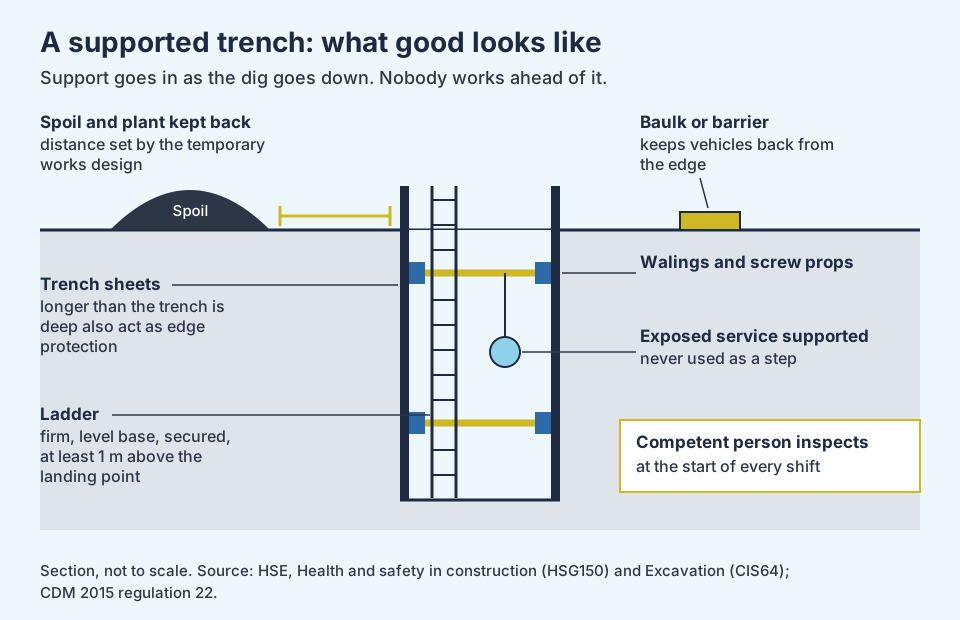
- the support system itself, such as trench box extensions or trench sheets longer than the trench is deep.
Fence off excavations in public places so members of the public cannot reach them.
Keeping plant and spoil back
Do not park plant or vehicles, or store spoil and materials, close to the sides. The extra load makes collapse more likely, and loose spoil can fall in. HSE's busy builder leaflet CIS64 records a case where heavy machinery working at the edge contributed to a fatal trench collapse.
- Use toe boards, projecting sheets or box sides to stop material falling, and wear head protection.
- Keep vehicles back with baulks or barriers, painted or marked so drivers can see them.
- Where lorries tip into an excavation, use secured stop blocks set far enough back that the edge will not break away.
How do you get in and out safely?
Provide a safe way in and out of every excavation. Where a risk assessment shows a ladder is suitable, HSE says it must be:
- strong enough and suitable for the job;
- on a firm, level base;
- secured against slipping;
- extended at least 1 metre above the landing point, unless there is another suitable handhold.
What about groundwater, fumes and confined spaces?
Plan for all three before the dig: control water in the support design, keep engine exhaust out of the excavation, and treat a deep excavation as a possible confined space.
| Hazard | What HSE says | How to control it |
|---|---|---|
| Groundwater | Water can flow into any excavation below the natural groundwater level, depending on how permeable the ground is. Take particular care near lakes, rivers and the sea | Design the support to control water entry and take the extra water load into account. Channel water to sumps and pump it out, but consider how pumping affects stability. Designers can consider ground freezing and grout injection |
| Fumes | Exhaust gases can collect in the dig | Do not use petrol or diesel engines in an excavation unless fumes are ducted away or there is forced ventilation. Do not put generators or compressors in or near the edge |
| Confined space | Deep excavations are among the less obvious confined spaces | See below |
When is an excavation a confined space?
The Confined Spaces Regulations 1997 define a confined space as any place, including a pit or trench, where its enclosed nature creates a foreseeable specified risk. The specified risks include fire or explosion, loss of consciousness or asphyxiation from gas, fume or lack of oxygen, and drowning. HSG150 names deep excavations among the less obvious confined spaces.
Where an excavation is a confined space:
- Avoid entry if the work can reasonably be done another way (regulation 4).
- Use a safe system of work for any entry, often with a permit to work.
- Plan the rescue before anyone goes in (regulation 5). HSE says it is not enough to rely on the emergency services.
- Check the air. HSE warns that a space safe one day may not be safe the next.
HSE's Approved Code of Practice L101 explains how to apply the regulations.
How do you protect exposed services and nearby structures?
Dig carefully around buried services and support them once they are exposed. Never start digging until the risks from underground services have been identified and controlled.
- Our guide to trial holes and trial pits covers how services are proved before the main dig, and our guide to avoiding utility strikes covers HSG47 and locating. HSG150 shows exposed services supported inside a shored excavation as good practice.
- Do not undermine scaffold footings, buried services, or the foundations of buildings and walls. HSE warns that garden and boundary walls often have shallow foundations that even small trenches can undermine. Decide before digging whether the structure needs extra support, which may need a structural engineer's advice.
- Watch overhead lines too. HSE warns that raised tipper bodies or excavators near overhead power lines can cause arcing, putting everyone nearby at risk.
Who inspects an excavation, and what goes in the report?
Under regulation 22(4), where supports or battering are used, a competent person must inspect the excavation, and any equipment and materials affecting its safety:
- at the start of the shift in which work is to be done;
- after any event likely to have affected its strength or stability (HSE's CIS64 gives poor weather as an example);
- after any material falls or is dislodged unintentionally.
Work can only proceed when the inspector is satisfied it is safe.
When is a written report required?
Under regulation 24, if the inspector is not satisfied, they must tell the person the inspection was for before the end of that shift. They must also give that person a written report within 24 hours. The report must include:
- the name and address of the person the inspection was for;
- the location and description of the place inspected, including equipment and materials;
- the date and time of the inspection;
- any matter that could put someone at risk;
- any action taken, and any further action needed;
- the name and position of the person making the report.
Keep the report on site until the work is finished, then for 3 months. Only one report is needed for start-of-shift inspections within any 7-day period. HSE's CIS64 advises keeping records of every check, so people can be sure it is safe for work to continue.
What should you check before the dig and every shift?
Check the information, design, equipment and controls before anyone breaks ground, then check the excavation itself at the start of every shift. The two checklists below draw together the duties set out above.
Before the dig
- ☐ Client information received on ground conditions, underground structures, watercourses and existing services.
- ☐ Service plans checked, services located and trial holes dug as needed (HSG47).
- ☐ Temporary works design in place and checked, with a temporary works coordinator named.
- ☐ Support equipment on site before digging starts.
- ☐ Edge protection, access ladders and public fencing planned.
- ☐ Spoil, plant and vehicle exclusion zones marked.
- ☐ Dewatering plan, with its effect on stability considered.
- ☐ Confined space assessment done, with a rescue plan if entry is needed.
- ☐ Nearby structures and overhead lines assessed.
Every shift
- ☐ Competent person has inspected and is satisfied before anyone enters.
- ☐ Supports, props and walings in place and undamaged.
- ☐ No cracking, bulging or water at the sides or base.
- ☐ Edge protection and ladders in place and secure.
- ☐ Spoil and plant kept back from the edge.
- ☐ No engines running in the excavation without ventilation.
- ☐ Inspection recorded, and any defect reported and fixed before work.
Where Ground Utilities fits
Ground Utilities Ltd is a utility and civil engineering contractor based at Highdrove Farm, Cottenham, Cambridgeshire, working across England and Wales since 2015. Deep excavations, bulk dig and clearance are part of our civil construction work, and we have excavated 50,000+ m in three years.
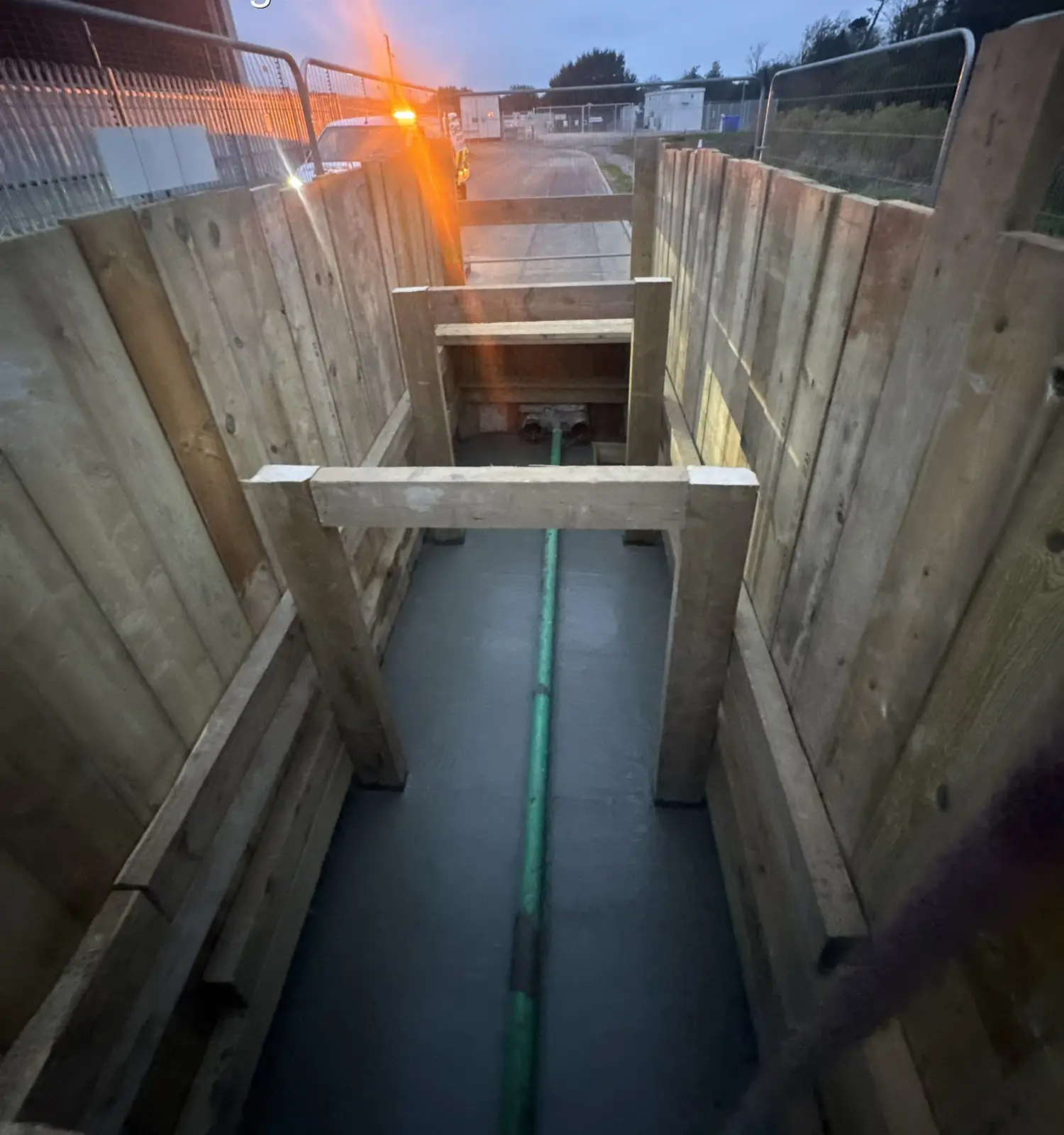
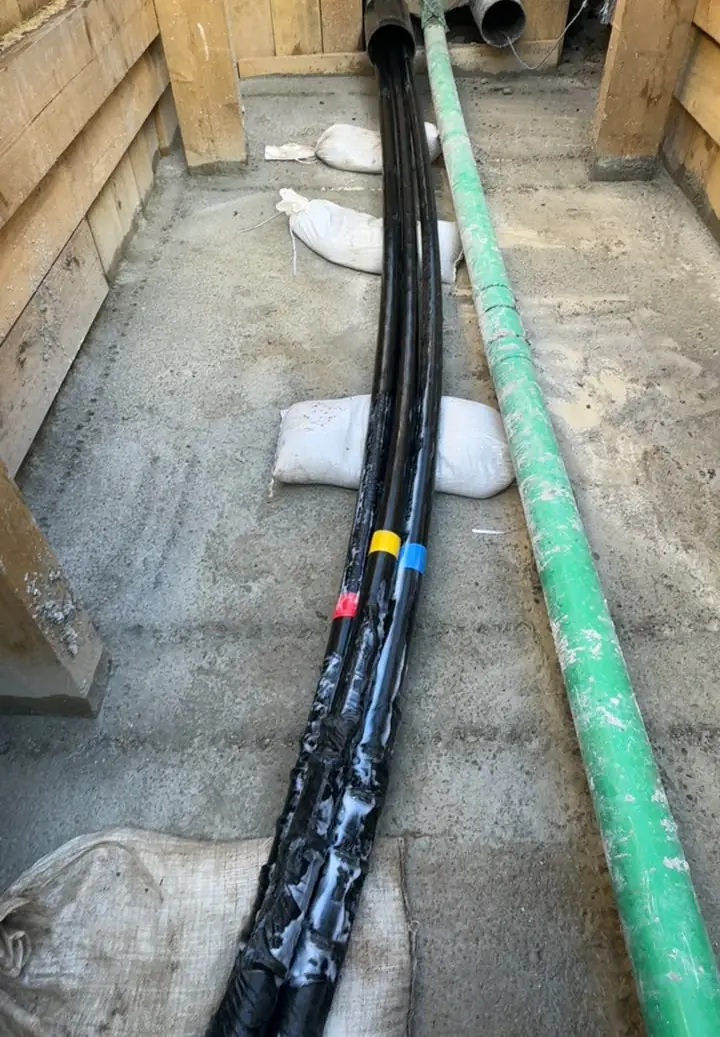
- Deep excavations for sewer and water service, South West London (2021): fifteen excavations, 1.5 to 13 metres wide and more than 3 metres deep. They exposed and supported an existing sewer and other utilities for a diversion route. The scope included trench supports, utility supports and full soil sampling of the spoil.
- Multiple utility services in Essex (2021): deep excavations so HV and LV cables, drainage and water could be lowered and protected. The asset owners carried out the diversions, working with us.
- Indian Queens private wire, Cornwall (in progress): HSG47 hand digging at 22 areas of concern and dewatering on waterlogged farmland. Deep crossings run around 2.9 metres deep, beneath a high-pressure gas main and a trunk main.
Our accreditations page records that:
- every operative is CSCS/EUSR registered and every supervisor is SMSTS qualified;
- we have worked 1,095+ days with no lost time incidents;
- we are certified to ISO 45001;
- Ground Utilities Ltd has never had enforcement action of any kind from the HSE;
- we are a member and supporter of the Utility Strike Avoidance Group.
Our work is civils, ducting, cable laying and waste water work. We do no gas work. We do not joint or terminate cables, make final live connections, make connection applications or carry out cable or network design.
Frequently asked questions
What is a trench box?
A trench box is a proprietary steel support placed in a trench to hold back the sides. HSG150 notes that trench boxes let support go in without people entering the excavation. Guard rails can be fixed to the box sides to stop falls.
What are trench sheets used for?
Trench sheets are steel sheets held in place by walings and props. They suit irregular shapes, joint bays and places where existing services cross the trench. HSE's CIS64 shows trench sheets with timber walings, screw props and sole plates as good practice.
At what depth does a trench need support?
The law sets no minimum depth. HSE says no ground can be relied upon to stand unsupported in all circumstances. An unsupported excavation is safe only if its sides are battered back far enough or it is in sound rock.
How often must an excavation be inspected?
Under CDM 2015 regulation 22, a competent person must inspect a supported or battered excavation at the start of every shift. They must also inspect after any event likely to affect stability, and after any accidental fall of material. Nobody may work in it until the inspector is satisfied.
Who can inspect an excavation?
A competent person. HSG150 describes them as someone who fully understands the dangers and the precautions needed.
Is a trench a confined space?
It can be. The Confined Spaces Regulations 1997 list a trench as a possible confined space. That applies where its enclosed nature creates a foreseeable risk, such as lack of oxygen, toxic gas or flooding. HSG150 names deep excavations as an example.
How far back should spoil be kept from the edge?
HSE guidance does not set a fixed distance. It says do not store spoil or park plant close to the sides, because the extra load makes collapse more likely. The distance should come from the temporary works design for that ground and depth.
How long must inspection reports be kept?
Under regulation 24, a report must be kept at the site until the construction work is finished, and then for 3 months. Copies or extracts must be sent to an HSE inspector on request.
Planning a deep excavation?
Tell us the site, the depth and the programme, and we will come back to you. Send an enquiry or call 01223 423918.
Sources
- The Construction (Design and Management) Regulations 2015, regulation 22: Excavations (legislation.gov.uk, 2015)
- The Construction (Design and Management) Regulations 2015, regulation 24: Reports of inspections (legislation.gov.uk, 2015)
- The Construction (Design and Management) Regulations 2015, regulation 19: Stability of structures (legislation.gov.uk, 2015)
- The Construction (Design and Management) Regulations 2015, regulation 15 (legislation.gov.uk, 2015)
- Excavations (HSE, 2022)
- Temporary Works (HSE, 2026)
- Health and safety in construction (HSG150) (HSE, third edition, 2006)
- Excavation: What you need to know as a busy builder (CIS64) (HSE, 2019)
- The Confined Spaces Regulations 1997, regulation 1 (legislation.gov.uk, 1997)
- The Confined Spaces Regulations 1997, regulation 4 (legislation.gov.uk, 1997)
- The Confined Spaces Regulations 1997, regulation 5 (legislation.gov.uk, 1997)
- Introduction to working in confined spaces (HSE, 2026)
- Safe work in confined spaces (L101) (HSE, third edition, 2014)
- Groundworker (ST0513) (Skills England, version 1.2)