The civils package on a UK battery energy storage system (BESS) site covers everything below and around the equipment: ground investigation, access roads, the compound and fencing, earthworks to a level platform, foundations for batteries, inverters and transformers, oil bunds, drainage and fire water containment, cable ducting and earthing, and the cable route to the grid connection.
Key points
- BESS stands for battery energy storage system: batteries in containers or cabinets that charge from the grid and export back to it.
- In England and Wales, battery storage (other than pumped hydro) has been consented by the local planning authority since December 2020, whatever its size.
- The National Fire Chiefs Council (NFCC) guidance approved in December 2025 sets an initial 30 m separation between battery units and occupied buildings, before mitigation.
- The same guidance asks for hydrants giving at least 25 litres a second, or an equivalent static supply lasting 120 minutes.
- Gov.uk guidance sets bunds for single oil containers at 110% of the container's capacity.
- Mandatory biodiversity net gain of 10% has applied to most new planning permissions in England since 12 February 2024.
- The grid connection is usually the longest lead item, and its cable route is often the biggest single civils job.
In this guide
- What is a BESS?
- What does the civils package on a BESS site include?
- How does site investigation shape the design?
- What goes into enabling works, access roads and the compound?
- How do NFCC fire guidance and separation distances affect the layout?
- What foundations do battery containers, inverters and transformers need?
- Do transformers on a BESS site need bunding?
- How is drainage and SuDS handled on a BESS site?
- What cable trenches and ducting does a BESS site need?
- How does the grid connection and cable route work?
- What about surfacing, landscaping and biodiversity net gain?
- How is a BESS civils programme sequenced?
- What are the typical risks on a BESS civils job?
- What happens at handover?
- Where Ground Utilities fits
- FAQs
- Talk to us about your BESS site
What is a BESS?
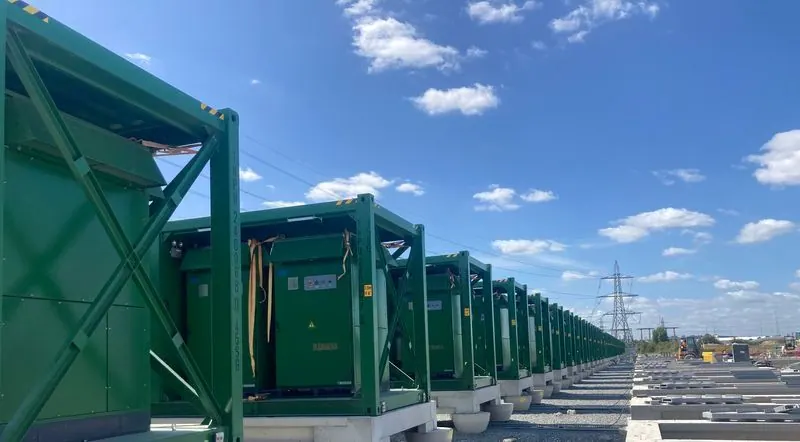
A BESS is a battery energy storage system. On a grid scale site, that means rows of battery containers or cabinets, power conversion equipment, transformers and switchgear, all connected to the electricity network so the site can import power, store it and export it later.
When people search "BESS meaning" or "what does BESS stand for", that is the answer. A "BESS site" is the land and infrastructure that houses one. For a groundworker, it is a fenced compound with heavy point loads, a lot of buried cable, and fire and pollution rules that fix the layout before anyone digs.
What does the civils package on a BESS site include?
It includes all the work that turns a field into a level, drained, fenced platform ready for electrical equipment, plus the buried infrastructure that links it together and to the grid. The table below breaks it down by stage.
| Stage | Typical civils scope |
|---|---|
| Pre-construction | Topographical survey, ground investigation, utility searches, archaeology and ecology surveys as required by the planning conditions |
| Enabling works | Site entrance, temporary haul roads, welfare and site compound, topsoil strip, temporary drainage, security fencing |
| Earthworks | Cut and fill to platform levels, compaction and testing, formation for roads and equipment areas |
| Foundations | Pads, plinths or piles for battery units, inverters or power conversion systems (PCS), transformers and switchgear |
| Containment | Transformer bunds and walls, kerbed areas, oil interceptors, fire water containment |
| Drainage | Gravity and pumped drainage, attenuation, sustainable drainage systems (SuDS), outfall |
| Cabling infrastructure | Low voltage (LV), medium voltage (MV) and high voltage (HV) ducts and draw pits, earthing grid, comms and fibre ducts |
| Grid interface | Cable route from the site substation to the point of connection, joint bays, crossings |
| Finishing | Permanent access road, stone or hardstanding surfacing, permanent fencing and gates, landscaping and habitat works |
How does site investigation shape the design?
Ground investigation tells the designer what the platform, foundations and drainage have to deal with, so it should be done before the layout is fixed. In the UK the reference is BS 5930, the code of practice for ground investigations; contamination and ground gas are covered separately in BS 8576.
The results decide whether the formation needs improving, whether equipment can sit on pads or needs piles, whether soakaways will work, and where the water table sits relative to trenches and bunds.
What goes into enabling works, access roads and the compound?
Enabling works come first: a site entrance off the public road, a temporary haul road, a contractor's compound with welfare, and perimeter fencing.
The permanent access road needs more thought than on most compounds, because the fire service sets its own requirements. The NFCC guidance includes access figures drawn from Approved Document B:
| Fire appliance | Road width between kerbs | Gateway width | Turning circle between kerbs | Clearance height | Carrying capacity |
|---|---|---|---|---|---|
| Pump appliance | 3.7 m | 3.1 m | 16.8 m | 3.7 m | 12.5 tonnes |
| High reach appliance | 3.7 m | 3.1 m | 26.0 m | 4.0 m | 17 tonnes |
The same guidance says fire vehicles should not have to reverse more than 20 m from the end of an access road, so the road needs a turning head. It prefers an alternative access point, taking account of wind direction, or a perimeter loop road where a second access is not practicable.
How do NFCC fire guidance and separation distances affect the layout?
Fire separation sets the spacing between equipment and the distance to neighbours, so it decides how much platform, road and duct you build. The current reference is the NFCC's grid scale energy storage system planning guidance for fire and rescue services, approved for publication in December 2025, which replaced the 2023 version.
The figures that matter to the groundworks are:
- An initial minimum of 30 m between BESS cabinets (or transformers and switchgear) and occupied buildings, before mitigation such as blast walls.
- Spacing between units can come down to a minimum of 0.914 m (3 ft) only where UL 9540A testing shows no propagation between cabinets; otherwise the guidance points to NFPA 855.
- Units should not be stacked vertically.
- Areas within 3 m of BESS cabinets should be kept clear of combustible vegetation.
- Hydrants should give at least 25 litres a second at any hydrant on site. Where that cannot be achieved, an equivalent static supply should last 120 minutes, which the guidance puts at about 180,000 litres.
- Static water tanks should be at least 10 m from any BESS container or cabinet, with vehicle access.
- Where water based suppression is used, there should be a plan to contain contaminated fire water run-off, shown on drawings with drainage runs, closure valves and bunded or kerbed areas.
Each of these lands on the civils package as tank bases, hydrant mains, non-combustible margins around units, and drainage that can be shut off.
What foundations do battery containers, inverters and transformers need?
Each piece of equipment needs a level, stable base sized to its load and the ground conditions. In general terms that means reinforced concrete pads or plinths where the ground is good, and piles, often auger piles, where it is not or where loads are high. Transformers usually sit on a plinth inside a bund.
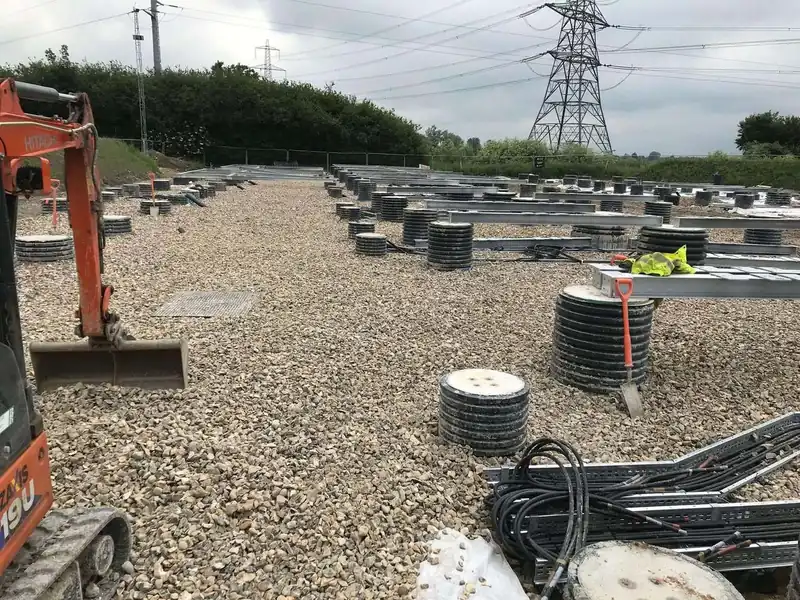
The equipment supplier's base drawings set the cast-in items, cable entry positions and tolerances.
Do transformers on a BESS site need bunding?
Yes, oil filled transformers are normally set inside a bund so that a leak or failure does not reach the ground or drains. Gov.uk guidance on oil storage for businesses sets a bund for a single container at 110% of its capacity, and for multiple containers at the greater of 110% of the largest or 25% of the total. It lists insulating oils used as an electrical insulator and coolant among the oils covered.
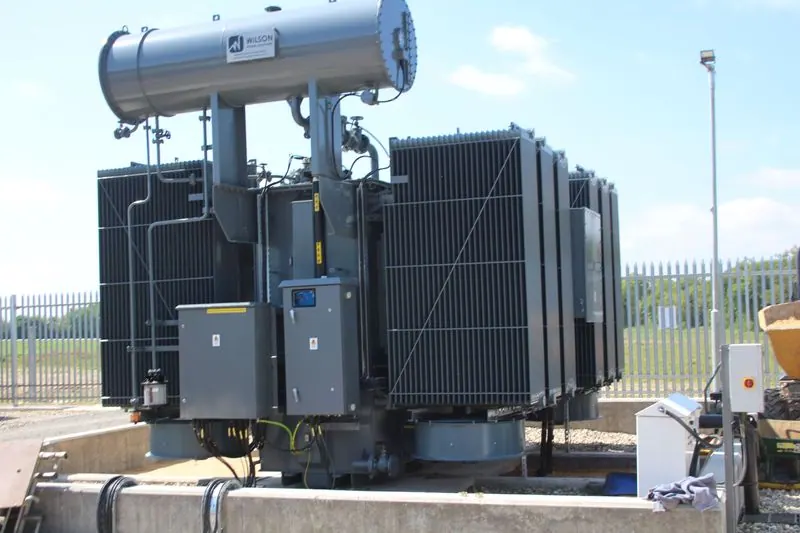
Whether the Control of Pollution (Oil Storage) (England) Regulations 2001 apply to a particular transformer is a question for the project's environmental adviser and the network operator's specification. In practice, the bund, its rainwater management and any oil interceptor are part of the civils package.
How is drainage and SuDS handled on a BESS site?
A BESS platform turns a field into hardstanding and roofed equipment, so run-off has to be controlled to no worse than the greenfield rate the planning conditions set. The standard design reference is the CIRIA SuDS Manual (C753), published in 2015.
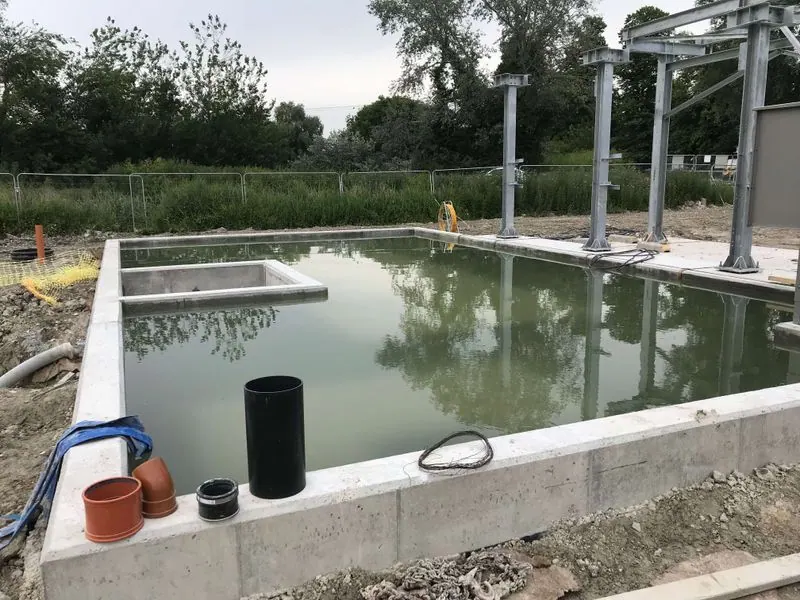
Typical elements are filter drains, swales or attenuation tanks or basins, flow controls, and oil interceptors where run-off passes oil risk areas. Pumped systems are used where levels do not allow a gravity outfall. The fire water containment described above has to work with this system, usually through penstocks or closure valves that isolate the site.
What cable trenches and ducting does a BESS site need?
A BESS site carries several networks in the ground at once: LV auxiliary supplies, MV cables between inverters, transformers and the site switchroom, HV cables to the point of connection, an earthing grid, and comms and fibre for control and protection.
Ducts are laid at the depths, separations and colours the electrical designer and network operator specify, with draw pits at changes of direction. See our guides to underground utility colour codes and cable jointing and joint bays.
Substation earthing on the network side is designed to Energy Networks Association (ENA) Technical Specification 41-24, which is referenced in the Distribution Code. The earthing grid is usually laid during the earthworks and foundation stage, before surfacing covers it.
How does the grid connection and cable route work?
The site connects to the network at a point of connection set by the distribution network operator (DNO) or, for transmission connections, through the National Energy System Operator (NESO) process. The cable route from the site substation to that point is often the largest single piece of civils on the job.
Connection work splits into non-contestable work, which the network operator keeps (point of connection, design approval, statutory wayleaves, inspection), and contestable work, which an accredited independent connection provider (ICP) can build. ICPs are accredited under the National Electricity Registration Scheme (NERS). Our article on what ICP and NERS mean for a new connection explains the split.
Cable routes cross roads, ditches and other services, so expect road space permits, trial holes, and trenchless crossings. See avoiding utility strikes, horizontal directional drilling and UKPN G81.
Grid capacity is the long lead item. NESO published the results of its reformed connections queue on 8 December 2025, with offers split into phases to 2030 and 2035. Check your offer dates before setting a civils programme.
What about surfacing, landscaping and biodiversity net gain?
Equipment areas are usually finished in compacted stone, with the access road in a heavier specification for fire appliance loads. Landscaping and screening sit outside the 3 m clear zone around units.
Mandatory biodiversity net gain (BNG) of 10% has applied in England since 12 February 2024, and the habitat has to be managed and maintained for 30 years. From 6 August 2026 it does not apply to applications of 0.2 hectares or below.
How is a BESS civils programme sequenced?
The sequence follows the ground upwards, with the grid route running in parallel.
- Surveys, ground investigation and discharge of pre-commencement planning conditions.
- Site entrance, haul road, compound and security fencing.
- Topsoil strip, earthworks to platform levels, temporary drainage.
- Piling and foundations, bunds and walls, with cast-in ducts.
- Main drainage, attenuation and interceptors.
- Duct runs, draw pits and earthing grid.
- Hydrant main or water tank bases, permanent access road.
- Equipment delivery and setting, then cable pulling by the electrical contractor.
- Grid cable route and joint bays, to suit the network operator's outage dates.
- Surfacing, permanent fencing, landscaping and BNG works, then handover.
Under the Construction (Design and Management) Regulations 2015 (CDM), the client appoints a principal designer and principal contractor on projects with more than one contractor, and the civils phase has to fit within that plan.
What are the typical risks on a BESS civils job?
- Soft or variable ground that needs formation improvement or piling.
- A high water table that floods trenches, bunds and attenuation excavations.
- Archaeology: policy HE5 of the National Planning Policy Framework says that where a proposal may involve archaeological interest, a desk based assessment and, where necessary, a field evaluation should be carried out, which can mean trial trenching before work starts.
- Ecology constraints such as protected species and seasonal survey windows.
- Grid connection dates that move, or outage windows that are fixed.
- Wet weather that stops earthworks and damages formation.
- Unknown buried services on the cable route.
What happens at handover?
Handover gives the client and network operator what they need to own and operate the asset. For the civils, that usually means as-built drawings of ducts, drainage and earthing, test results for compaction, concrete and drainage, operation and maintenance information for interceptors, pumps and SuDS, and the health and safety file under CDM. Assets adopted by the network operator need their own records to its specification.
Where Ground Utilities fits
Ground Utilities is a NERS accredited power and civils contractor based in Cottenham, Cambridgeshire, working across the UK. See our battery storage and solar farm services, civil construction and multi utility services, and our accreditations.
On a 49.9 MW battery storage facility in Cambridgeshire, February to October 2021, our works were all civil, drainage and electrical ducting to the entire site. They included foundations for equipment, bunds and walls, auger foundations of different sizes, the access road and site compound, drainage with pumped, gravity, interceptor and attenuation controls, and ducting and cable installation for 132kV and 33kV cables.
We also worked on a 49.9 MW battery energy storage project in Brentwood, Essex, January to October 2022, next to a 132kV substation.
Other relevant jobs include Burwell Solar Farm, a 49.8 MW solar farm on an 80 hectare site in south east Cambridgeshire built between late 2022 and August 2023, HV cable installations including two 33kV circuits over about 25 km between a DNO substation and a client substation, and the Thetford cable route and civil build.
Related guides: section 38, 104 and 278 agreements.
FAQs
What does BESS stand for?
BESS stands for battery energy storage system. On a grid scale site it means battery containers or cabinets, inverters, transformers and switchgear connected to the electricity network so the site can import, store and export power.
What is a BESS site?
A BESS site is the land and infrastructure that houses a battery energy storage system: a level, drained and fenced compound with equipment foundations, buried cable ducts, an access road and a cable connection to the grid.
How far does a BESS have to be from houses?
The NFCC guidance approved in December 2025 sets an initial minimum of 30 m between BESS cabinets, transformers or switchgear and occupied buildings, before mitigation such as blast walls is taken into account.
How far apart do battery containers need to be?
Under the December 2025 NFCC guidance, spacing can come down to 0.914 m (3 ft) only where UL 9540A testing shows no propagation between cabinets. Otherwise the guidance points to NFPA 855.
How much fire water does a BESS site need?
The NFCC guidance asks for hydrants giving at least 25 litres a second. Where that is not possible, an equivalent static supply lasting 120 minutes is needed, about 180,000 litres, with tanks at least 10 m from battery units.
Do transformers on a BESS site need a bund?
Oil filled transformers are normally set in a bund. Gov.uk oil storage guidance sets a bund for a single container at 110% of its capacity. The project's environmental adviser and network operator confirm which rules apply.
Does a battery storage site need planning permission?
Yes. In England and Wales, battery storage other than pumped hydro has been consented by the local planning authority under the Town and Country Planning Act 1990 since December 2020, whatever its capacity.
Does biodiversity net gain apply to BESS sites?
In England, mandatory biodiversity net gain of 10% has applied to most new planning permissions since 12 February 2024, with habitat maintained for 30 years. Sites of 0.2 hectares or below are exempt from 6 August 2026.
Who builds the grid connection for a BESS?
The network operator keeps the non-contestable work, such as the point of connection and design approval. Contestable work, such as trenching, ducting and cable laying, can be built by a NERS accredited independent connection provider.
Talk to us about your BESS site
If you are planning a battery storage site and want a contractor who can price the platform, drainage, ducting and grid cable route together, send us the layout and connection offer. Call +44 1223 423918, email info@ground-utilities.co.uk or use our contact page.
Sources
- National Fire Chiefs Council, Grid scale energy storage system planning: guidance for fire and rescue services (approved December 2025). nfcc.org.uk
- GOV.UK, Oil storage regulations for businesses (updated 2 May 2023). gov.uk
- The Control of Pollution (Oil Storage) (England) Regulations 2001, SI 2001/2954. legislation.gov.uk
- The Infrastructure Planning (Electricity Storage Facilities) Order 2020, SI 2020/1218. legislation.gov.uk
- GOV.UK, Understanding biodiversity net gain (updated 14 July 2026). gov.uk
- CIRIA, The SuDS Manual (C753), 2015. susdrain.org
- BSI, BS 5930:2015+A1:2020 Code of practice for ground investigations. knowledge.bsigroup.com
- Ofgem, DCode004: ENA Technical Specification 41-24 substation earthing. ofgem.gov.uk
- National Grid Electricity Distribution, Competition in connections: information for customers. connections.nationalgrid.co.uk
- NESO, Connections reform. neso.energy
- HSE, CDM 2015: principal contractors. hse.gov.uk
- GOV.UK, National Planning Policy Framework, chapter 20: conserving and enhancing the historic environment (policy HE5). gov.uk
- Ground Utilities project pages: Construction of 49.9MW Battery Storage Facility; 49.9 MW Battery Energy Storage; HV Cable Installations. ground-utilities.co.uk