How far ahead you must apply to work in a road in England depends on four things: how long the works last, whether a road closure is needed, whether the street is in a permit scheme, and whether you need a section 50 licence. The permit periods are set nationally. Section 50 licences and road closures run on each council's own timetable, and they usually take longest.
This guide works through the timetable in detail: how to count working days, what happens after you apply, how to extend a permit, and how the licence and closure times stack up on a cable route. Our NRSWA and street works guide explains the wider regime, and our section 50 licence page explains who needs a licence and what it costs. This guide covers England only.
Key points
- The DfT permit guidance sets minimum application periods of 3 working days for minor works and 10 for standard works.
- Major works last 11 working days or more, or need a temporary traffic regulation order. DfT says they need provisional advance authorisation at least 3 months ahead, then a permit application at least 10 working days before the start.
- Section 98(2) of NRSWA says a working day excludes weekends, Christmas Day, Good Friday and bank holidays, and a notice given after 4.30pm counts as given the next working day.
- If the authority does not respond to a complete application in time, the permit is deemed granted under regulation 16 of the 2007 permit regulations, and no fee is payable.
- The DfT guidance says a permit extension must be applied for at least 2 days, or 20% of the original duration, before it expires, whichever is longer.
- Section 50 licence times are set locally. Luton publishes 15 working days to 3 months; Essex advises up to 12 weeks.
In this guide
- What decides your lead time?
- What are the minimum permit application periods in England?
- How do you count working days?
- What happens after you apply?
- How do you extend or change a permit?
- What about emergency and urgent works?
- What if the street has no permit scheme?
- How long does a section 50 licence take?
- How long does a road closure take?
- What else can stop works starting on time?
- How much does a street works permit cost?
- How do you build a lead-time plan for a cable route?
- Where Ground Utilities fits
- Frequently asked questions
- Sources
What decides your lead time?
Four questions set the timetable, and the answers are needed before you fix a start date.
| Question | Why it matters |
|---|---|
| How many working days will the works occupy the street? | Duration sets the category: minor, standard or major. |
| Will you need a road closure, or a ban on turns or parking? | Anything needing a temporary traffic regulation order (TTRO) is major, however short. |
| Is the street in a permit scheme? | Permit schemes and the older noticing system use different rules. |
| Do you have a statutory right to dig, or do you need a section 50 licence? | A private cable or duct needs a licence first, and that runs on the council's timetable. |
The Department for Transport's permit scheme statutory guidance (March 2026) stresses that applications must be made in good time.
What are the minimum permit application periods in England?
The DfT permit guidance sets 3 months for provisional advance authorisation on major works, then 10 working days for major and standard permits and 3 for minor ones. It also sets how fast the authority must respond. The guidance says schemes should use the time periods set in Street Manager.
| Category | Provisional advance authorisation (PAA) | Permit application | Authority response to a PAA | Authority response to a permit application |
|---|---|---|---|---|
| Major | At least 3 months before the start | At least 10 days before the start | 1 calendar month | 5 days |
| Standard | Not required | At least 10 days before the start | Not applicable | 5 days |
| Minor | Not required | At least 3 days before the start | Not applicable | 2 days |
| Immediate | Not required | Within 2 hours after the start | Not applicable | 2 days |
"Days" are working days unless the table says otherwise. The category definitions are in the DfT guidance:
- Minor: a planned duration of 3 working days or less.
- Standard: 4 to 10 working days inclusive.
- Major: 11 working days or more, or any activity that needs a TTRO under the Road Traffic Regulation Act 1984.
- Immediate: emergency works under section 52 of NRSWA, and urgent works.
The TTRO rule catches people out. The guidance says works lasting less than 10 working days are still major if they need a TTRO, giving a street closure or a banned turn as examples.
What is a provisional advance authorisation?
A PAA approves the proposed activity in principle and lets the promoter provisionally reserve the road space. The DfT guidance says it should include:
- the location and proposed dates
- an outline description of the works
- working hours and road space
- the method of working and traffic management
The start date in a PAA is provisional. The final permit application can change the dates, but the applicant must explain why. A PAA cannot be varied: if plans change before the permit is issued, you tell the authority and submit a revised PAA application.
One permit per street, one permit per phase
Each permit application covers one street, and the DfT guidance defines a street as a single USRN (Unique Street Reference Number). A long road with two USRNs needs two permits. Separate interim and permanent reinstatement visits each need their own permit, so programme the second visit as well.
How do you count working days?
Section 98(2) of NRSWA sets two rules for counting:
- A working day is any day other than a Saturday, Sunday, Christmas Day, Good Friday or a bank holiday.
- A notice given after 4.30pm on a working day is treated as given on the next working day.
Permit start and end dates work differently. The DfT guidance says they are in calendar days, so it is clear whether a permit is valid at weekends and on bank holidays.
A worked example over Christmas 2026
Take a standard activity due to start on Monday 4 January 2027. In England and Wales, 25 December 2026 (Friday), 28 December 2026 (the substitute Boxing Day) and 1 January 2027 are bank holidays.
| Working days before the start | Date |
|---|---|
| 1 | Thursday 31 December 2026 |
| 2 | Wednesday 30 December 2026 |
| 3 | Tuesday 29 December 2026 |
| 4 | Thursday 24 December 2026 |
| 5 | Wednesday 23 December 2026 |
| 6 | Tuesday 22 December 2026 |
| 7 | Monday 21 December 2026 |
| 8 | Friday 18 December 2026 |
| 9 | Thursday 17 December 2026 |
| 10 | Wednesday 16 December 2026 |
The tenth working day before the start is Wednesday 16 December 2026. Applying that day, before 4.30pm, is the safe date. Street Manager applies the periods automatically, so check the date it shows before you rely on a hand count.
The lesson is the Christmas gap. A standard permit for the first week of January needs to go in by mid-December.
What happens after you apply?
The authority must grant or refuse within the response times in the table above. If it does not respond to a duly completed application in time:
- the permit is deemed granted, under regulation 16 of the Traffic Management Permit Scheme (England) Regulations 2007
- no fee can be charged for the deemed permit
The permit can carry conditions, for example on timing, road space and traffic management. Conditions must use the national wording in DfT statutory guidance, and one standard condition requires the permit reference to be displayed on site.
When can you start inside the permit dates?
It depends on the street, and the DfT guidance sets two cases:
- Road categories 0, 1 and 2, and traffic-sensitive streets. The start and end dates on the permit are the planned start and finish. The permit is not valid before the start date.
- Road categories 3 and 4 that are not traffic-sensitive. The permit should give a starting window. Once you start, you must finish within the permitted duration, and if you start on the last day of the window, that day counts as day 1.
Road category here is the reinstatement category in the SROH. Our road reinstatement guide explains road types 0 to 4.
How do you extend or change a permit?
You apply for a variation, shown in Street Manager as a permit change, before the permit expires. The DfT guidance sets the minimum period as 2 days or 20% of the original duration, whichever is longer, and the authority should respond within 2 days.
| Original permit duration | 20% of duration | Apply for an extension at least |
|---|---|---|
| 3 working days | 0.6 days | 2 working days before expiry |
| 10 working days | 2 days | 2 working days before expiry |
| 15 working days | 3 days | 3 working days before expiry |
| 30 working days | 6 days | 6 working days before expiry |
The guidance tells authorities that the "reasonable period" for overrun purposes is the permit period. So if you think you will overrun, you need a variation in time to avoid an overrun charge. Our NRSWA guide sets out the overrun charge rates.
What about emergency and urgent works?
Emergency and urgent works can start without a permit, with an application within 2 hours of starting. The DfT guidance says that where the authority's contact line is not staffed out of hours, the deadline is 10am on the next working day.
| Type | Defined in | What it covers |
|---|---|---|
| Emergency works | Section 52 of NRSWA | Works needed to end or prevent circumstances likely to cause danger to people or property |
| Urgent works | The 2007 noticing regulations | Other works needed to end or prevent an unplanned interruption of supply, avoid substantial loss to the undertaker, or reconnect a supply where delay would bring liability |
Immediate works are not a shortcut for planned civils. A cable route, duct installation or joint bay programme is planned work and needs the planned periods.
What if the street has no permit scheme?
Where no permit scheme operates, works are noticed under NRSWA and the Street Works (Registers, Notices, Directions and Designations) (England) Regulations 2007. The DfT guidance says almost every highway authority in England now runs a permit scheme, so this is now rare.
| Notice | Who and when | Period |
|---|---|---|
| Advance notice, section 54 | Major works | At least 3 months before the start |
| Start date notice, section 55 | Major and standard works | At least 10 days (regulation 9) |
| Start date notice, section 55 | Minor works | At least 3 days (regulation 9) |
| Urgent works notice | After starting | Within 2 hours of the works beginning (regulation 9) |
How long does a section 50 licence take?
There is no national processing time for a section 50 licence. Each street authority sets its own, and DfT's section 50 guidance asks authorities to publish indicative timescales on their websites.
The Act fixes one period. Under Schedule 3, the street authority must give at least 10 working days' notice to those affected before granting a licence, so no licence can be issued in less time than that.
Our section 50 licence page gives Shropshire's and Cheshire West and Chester's published times and fees. Two more published examples:
| Authority | Published timetable |
|---|---|
| Luton Borough Council | 15 working days for works of 1 to 3 days, 20 working days for 4 to 10 days, 3 months for works over 10 days. A street closure needs a TTRO, which takes 12 weeks to process. |
| Essex County Council | 15 working days to write and approve the licence instructions, then 10 working days' notice to statutory undertakers to reply. Allow up to 12 weeks for the full statutory process. |
The licence is only the first step. Essex says no works may be carried out until the licence has been issued and the road space booking approved, and the road space booking follows the licence. So programme the notice periods to follow the licence date, not run alongside it.
Does a section 50 licence holder need a permit?
The DfT section 50 guidance:
- says statutory undertakers apply for permits through Street Manager
- does not say licensees must
- notes that authorities may register section 50 licences in Street Manager
The licence holder still gives the authority notice before each set of works, on the timings the licence sets. Ask the authority early how it wants that done.
How long does a road closure take?
A road closure needs a TTRO under section 14 of the Road Traffic Regulation Act 1984, and that makes the works major, so the 3-month PAA applies as well. The law sets only a 7-day minimum notice, but councils take far longer to process an application.
| TTRO step | Time | Source |
|---|---|---|
| Notice of intention in a local newspaper | At least 7 days before the order is made | Road Traffic (Temporary Restrictions) Procedure Regulations 1992 |
| Notice of the making of the order | Within 14 days after it is made | Road Traffic (Temporary Restrictions) Procedure Regulations 1992 |
| Council processing (example) | 12 weeks | Luton Borough Council |
| Maximum length of a TTRO for works on a road | 18 months, or longer where the authority states the works will take longer | Road Traffic Regulation Act 1984, section 15 |
The DfT permit guidance warns that TROs are applied for separately, to their usual timescales, and a permit application does not include one. For how a closure fits with the traffic management design, see our guide to street works traffic management.
What else can stop works starting on time?
Several designations can add time or block a date entirely. Check each street on the route early.
| Designation | What it means | Source |
|---|---|---|
| Section 58 restriction | After substantial road works, new street works can be restricted for 5 years (reconstruction), 3 years (resurfacing or level change), 1 year (other works on busy streets) or 6 months (other works on category 3 and 4 streets). | NRSWA s58; 2007 noticing regulations, reg 11 |
| Section 58A restriction | A similar restriction after substantial street works by an undertaker. | NRSWA s58A |
| Protected street | Placing apparatus needs the street authority's consent. Consent is not needed under a section 50 licence granted before the street became protected. | NRSWA s61 |
| Special engineering difficulties | A plan and section of the works must be settled before work starts. | NRSWA s63 and Schedule 4 |
| Traffic-sensitive street | Special provisions on timing apply, and permit dates are fixed, with no starting window. | NRSWA s64; DfT permit guidance |
Restrictions have exceptions, including immediate works and some new customer connections. Ask the authority early if your route crosses a recently resurfaced road.
How much does a street works permit cost?
The DfT guidance sets maximum permit fees from £40 to £240, depending on the activity and the road. Authorities may charge less, and no fee is payable for a deemed permit.
| Permit | Road category 0, 1, 2 or traffic-sensitive | Road category 3 or 4, not traffic-sensitive |
|---|---|---|
| Provisional advance authorisation | £105 | £75 |
| Major activity (over 10 days, or needing a TRO) | £240 | £150 |
| Standard activity | £130 | £75 |
| Minor activity | £65 | £45 |
| Immediate activity | £60 | £40 |
| Permit change | £45 | £35 |
Section 50 licence fees and TTRO charges are separate and set locally. So are any lane rental charges.
How do you build a lead-time plan for a cable route?
Work backwards from the date you need the gang in the road, street by street. For a private cable needing a section 50 licence and a lane closure, a typical sequence is:
- Fix the start date and duration for each street (each USRN). Split long routes into permit lengths.
- Classify each length. Any TTRO, or more than 10 working days, means major.
- Book the PAA date. At least 3 months before the start for major works.
- Allow for the TTRO. Use the council's published processing time, and apply for it separately.
- Allow for the section 50 licence before all of that. Use the council's published time, which includes at least 10 working days of statutory notice.
- Diary the permit or notice. At least 10 working days before the start for major and standard works, 3 for minor, before 4.30pm.
- Diary the variation deadline. 2 days or 20% of the duration before the permit ends, whichever is longer.
- Plan the second visit. A permanent reinstatement after an interim one needs its own permit. NRSWA section 70 requires it within 6 months of the interim.
A worked example: a 400 m road section on a private wire
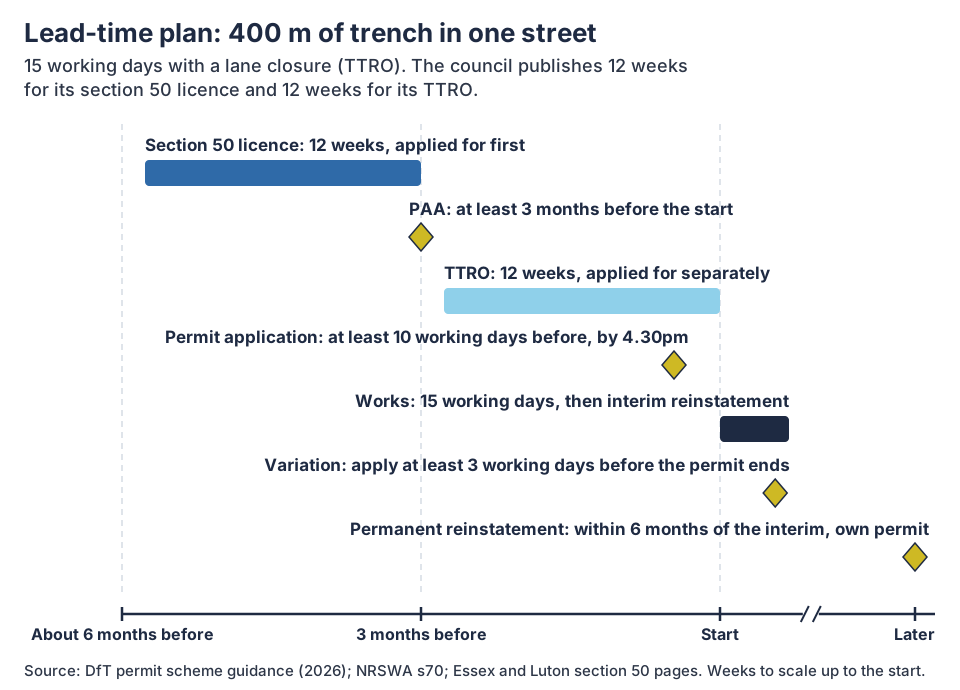
Say a private wire needs 400 m of trench in one street, taking 15 working days with a lane closure under a TTRO, in a council that publishes 12 weeks for both its section 50 licence and its TTRO.
- The works are major (over 10 days and needing a TTRO), so the PAA goes in at least 3 months before the start.
- The TTRO and the licence each take 12 weeks on the council's published times.
- If the council wants the licence issued before it books road space, as Essex does, the licence application has to go in about 12 weeks before the PAA date. That is roughly six months before the start.
- An interim reinstatement means a second permit, and a permanent visit within 6 months.
Where Ground Utilities fits
Ground Utilities Ltd is a civils and utility-route contractor based at Highdrove Farm, Cottenham, Cambridgeshire, working across England and Wales since 2015. Our supervisors and operatives hold NRSWA street works cards.
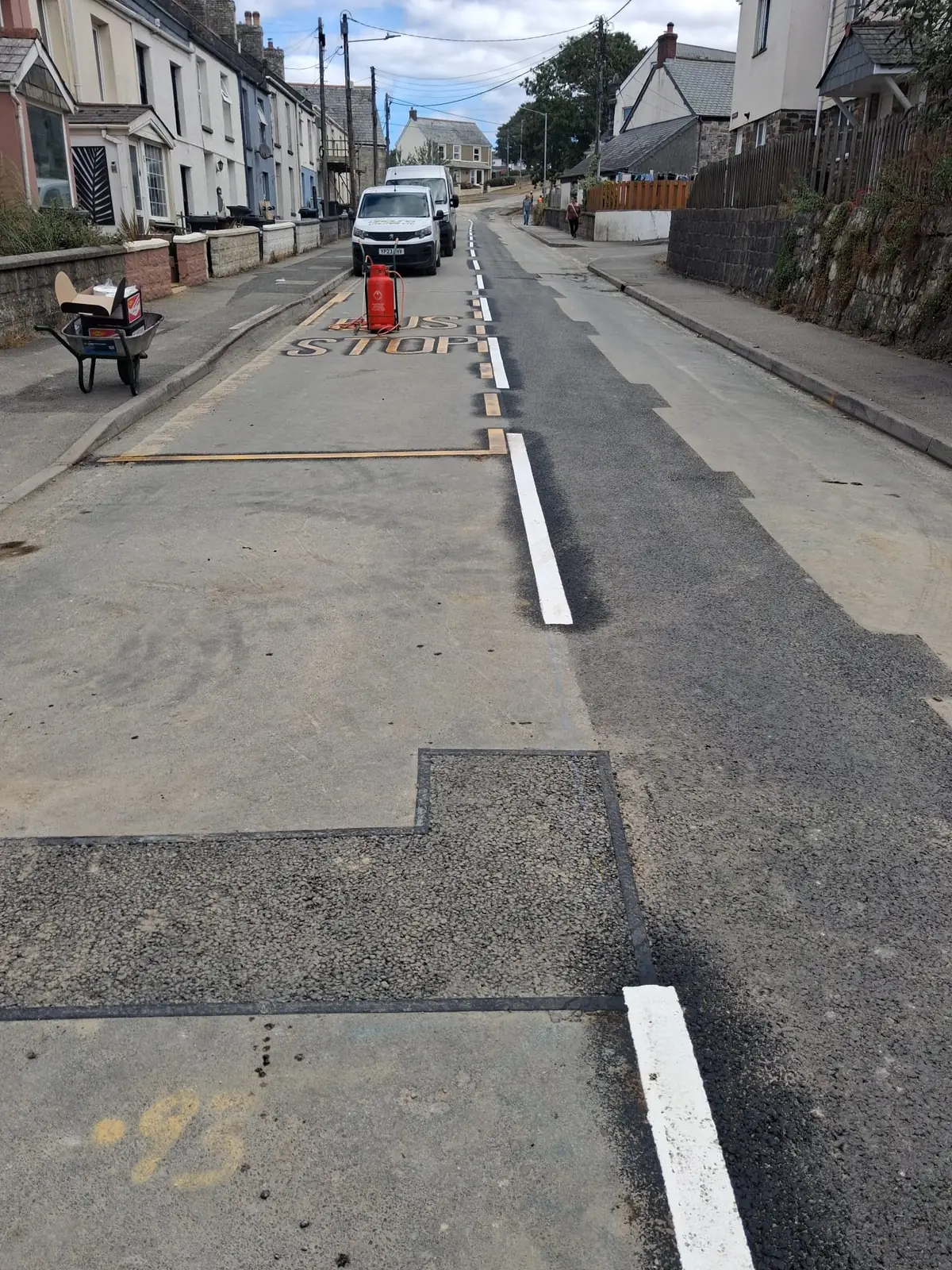
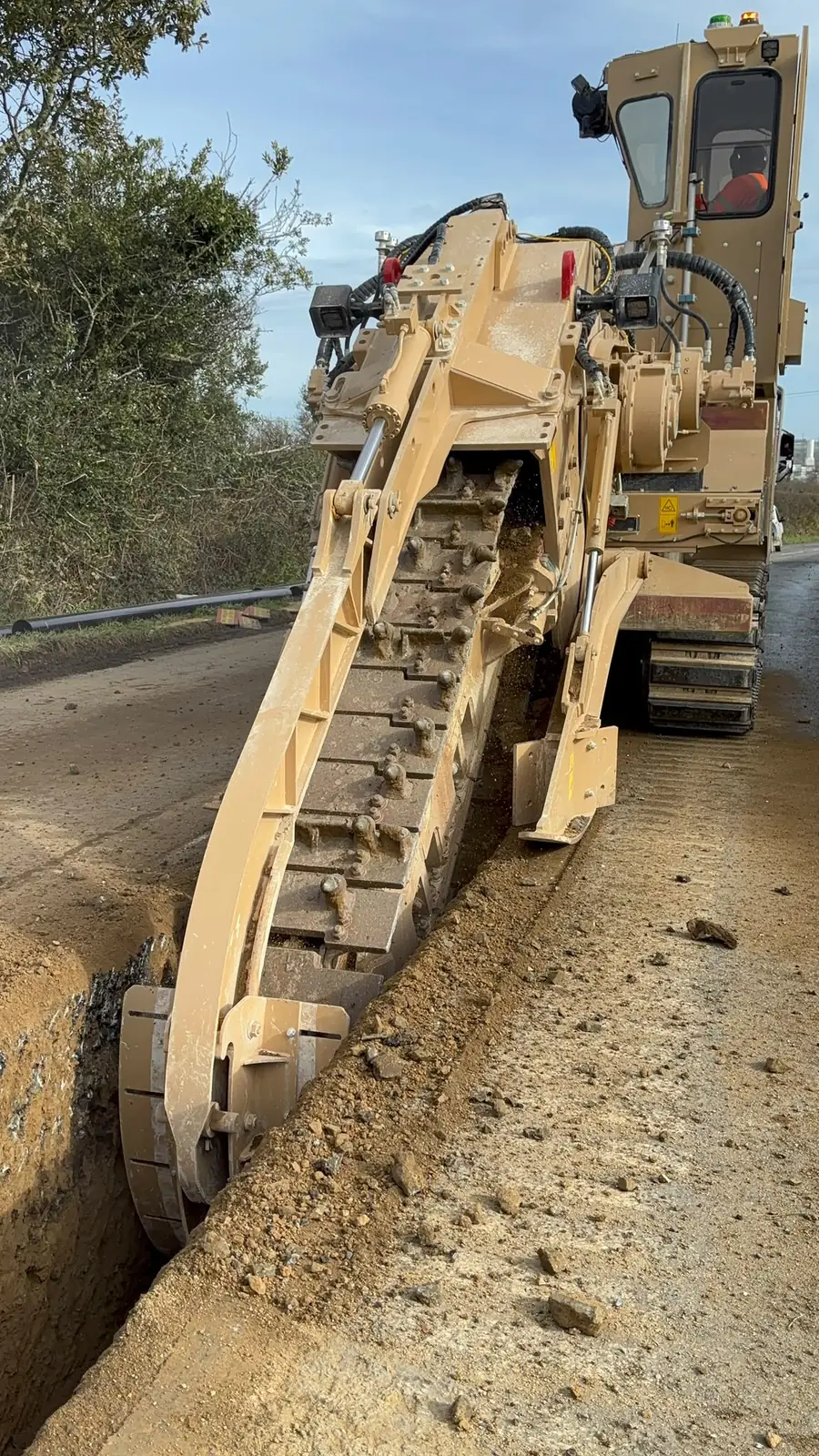
Where a client needs it, we have applied for and managed the section 50 licence ourselves, as on the Indian Queens private wire in Cornwall and on a scheme in Grimsby. Indian Queens has 4 km of trench in the highway, and our scope there includes CDM set-up, traffic management and highway permits, council liaison and the section 50 licence. Community liaison has included 10 bus stop suspensions.
We then build the route: trenching, ducts, joint bays, cable installation and reinstatement (see HV and LV cable installation). We do no gas work, and we do not joint or terminate cables, make final live connections, make connection applications to the network companies, or do design. The network operator, the client's connection provider or other specialists do those.
Frequently asked questions
How much notice do you need for a street works permit?
In England, the DfT permit guidance sets at least 3 working days for minor works and 10 working days for standard works. Major works need 3 months' provisional advance authorisation, then a permit application 10 working days ahead. Immediate works need an application within 2 hours after starting.
What counts as major works?
Works that last 11 working days or more, or any works that need a temporary traffic regulation order, such as a road closure. A TTRO makes even a one-day job major.
How long does a section 50 licence take?
Each council sets its own time: Luton publishes 15 working days for works of 1 to 3 days and 3 months for works over 10 days. Essex advises allowing up to 12 weeks. The Act requires at least 10 working days' notice to affected parties before any licence is granted.
Do I still need to tell the council before each job if I have a section 50 licence?
Yes. The licence gives the right to place apparatus in the street, and the licence holder still gives the authority notice before each set of works, on the timings the licence sets.
What happens if the council does not respond to a permit application?
If the authority does not grant or refuse a duly completed application within its time limit, the permit is deemed granted. Regulation 16 of the 2007 permit scheme regulations sets this rule, and no fee is payable.
How late can I apply to extend a permit?
The DfT guidance says at least 2 days, or 20% of the original duration, before the permit expires, whichever is longer. The authority should respond within 2 days.
Does a notice sent in the evening count?
A notice given after 4.30pm on a working day is treated as given on the next working day, under section 98(2) of NRSWA.
Sources
- Permit schemes: statutory guidance for highway authorities (Department for Transport, 2026)
- Issuing section 50 street works licences (Department for Transport, 2026)
- New Roads and Street Works Act 1991, section 50 (legislation.gov.uk, 1991)
- New Roads and Street Works Act 1991, section 52 (legislation.gov.uk, 1991)
- New Roads and Street Works Act 1991, section 54 (legislation.gov.uk, 1991)
- New Roads and Street Works Act 1991, section 55 (legislation.gov.uk, 1991)
- New Roads and Street Works Act 1991, section 58 (legislation.gov.uk, 1991)
- New Roads and Street Works Act 1991, section 61 (legislation.gov.uk, 1991)
- New Roads and Street Works Act 1991, section 63 (legislation.gov.uk, 1991)
- New Roads and Street Works Act 1991, section 64 (legislation.gov.uk, 1991)
- New Roads and Street Works Act 1991, section 70 (legislation.gov.uk, 1991)
- New Roads and Street Works Act 1991, section 98 (legislation.gov.uk, 1991)
- New Roads and Street Works Act 1991, Schedule 3 (legislation.gov.uk, 1991)
- The Street Works (Registers, Notices, Directions and Designations) (England) Regulations 2007 (legislation.gov.uk, 2007)
- The Traffic Management Permit Scheme (England) Regulations 2007, regulation 16 (legislation.gov.uk, 2007)
- The Road Traffic (Temporary Restrictions) Procedure Regulations 1992, regulation 3 (legislation.gov.uk, 1992)
- Road Traffic Regulation Act 1984, section 15 (legislation.gov.uk, 1984)
- After you apply for a Section 50 street works licence (Luton Borough Council, 2026)
- Section 50 Street Works Licences (Essex County Council, 2026)
- UK bank holidays (GOV.UK, 2026)